SpaceX
SpaceX shares the first look at V3 Super Heavy booster, ready for pre-launch testing

On November 20, 2025, SpaceX announced a pivotal milestone in its Starship program with Booster 18, the inaugural Super Heavy Version 3 (V3) booster, which began prelaunch testing preparations at Starbase in Texas.
The company has shared striking images of the massive rocket inside the high bay. The X post highlights redesigned propellant systems and enhanced structural strength. This marks the transition from iterative V2 prototypes to a more mature design poised for orbital missions, in-orbit refueling, and beyond.
The V3 Super Heavy is an evolution from its predecessors. With its identical appearance to V2 boosters, the V3 incorporates the cutting-edge Raptor 3 engines, which deliver higher thrust, improved reliability, and simplified design with minimal shielding thanks to advanced regenerative cooling.


These engines reduce dry mass, enabling greater efficiency and payload capacity. The booster’s redesigned propellant tanks and feed systems optimize flow rates, while reinforced structures prepare it for the stresses of repeated catches by the Mechazilla tower arms.
Key V3 advancements extend to the overall Starship system. The upper stage (Ship) for V3 flights will feature larger propellant tanks, increasing height by about 1.5 meters and boosting capacity for longer-duration missions.
Avionics upgrades, enhanced energy storage, and new docking adapters enable critical demonstrations such as orbital propellant transfer, essential for lunar landings and Mars voyages. Structural changes, including improved heat shields and payload compartments, support heavier next-generation Starlink satellites and NASA’s Artemis Human Landing System (HLS).
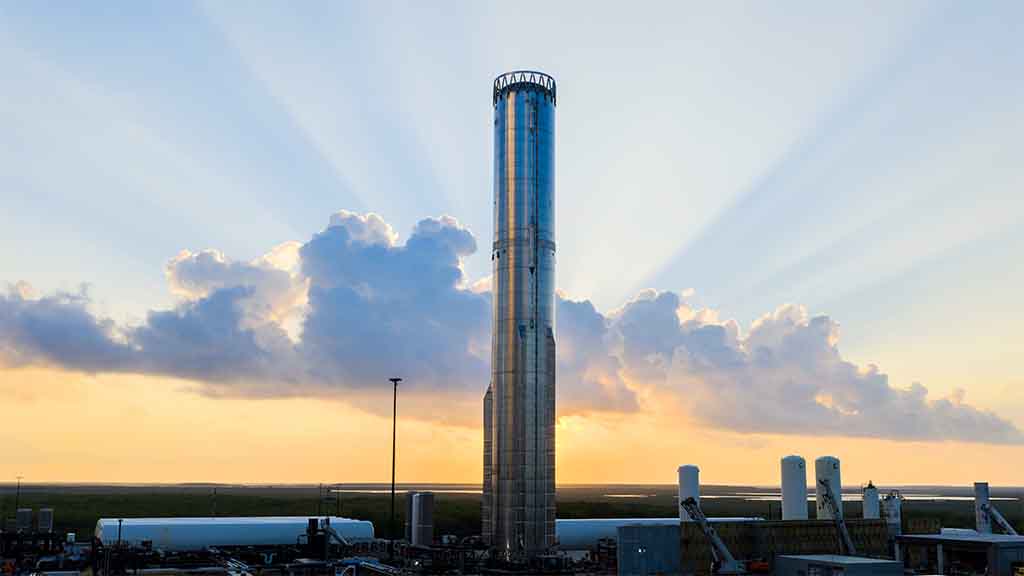
SpaceX Starship Super Heavy booster v3
With Booster 18’s testing underway, SpaceX is accelerating toward its goal of frequent orbital flights in 2026. These V3 vehicles will pave the way for reusability, including deploying payloads to orbit, establishing refueling depots in space, and supporting uncrewed Mars missions as early as late 2026. SpaceX CEO, Elon Musk, has described V3 as a “radical redesign” that incorporates lessons from 11 prior test flights, positioning Starship as the backbone for humanity’s multiplanetary future.