News
Rivian shares R2 prototype with LiDAR Integration

In a recent social media post, Rivian posted images of a wrapped R2 prototype while highlighting Rivian’s integration of LiDAR sensors, a key component in advanced driver-assistance systems (ADAS).
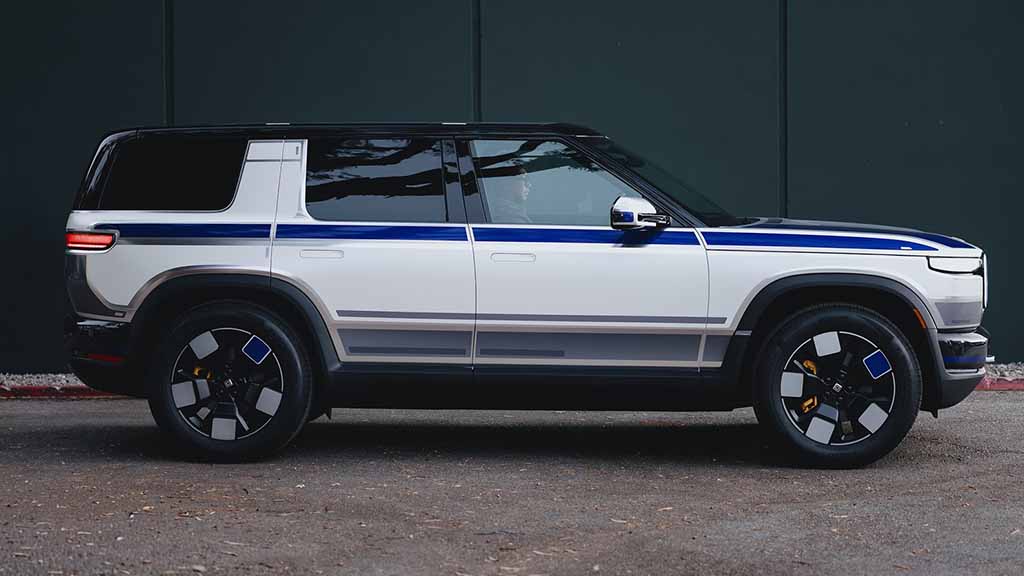
The images depict the R2, a compact SUV slated for production in 2026, adorned in a distinctive white-and-blue wrap that accentuates its sleek, angular lines.
Positioned against a neutral backdrop, the vehicle showcases its elevated stance, large wheel arches, and panoramic glass roof—hallmarks of Rivian’s design philosophy emphasizing durability and openness to the outdoors.
The wrap’s bold stripes and accents not only highlight the R2’s aerodynamic profile but also conceal and reveal hardware innovations. Upon closer inspection, small protrusions along the roofline and front grille hint at the LiDAR units, seamlessly blended into the body’s contours to maintain aesthetic integrity.

LiDAR, or Light Detection and Ranging, uses laser pulses to create precise 3D maps of surroundings, enhancing perception for autonomous driving features. Rivian’s adoption signals a strategic pivot toward more robust sensor fusion, combining LiDAR with cameras and radar for improved safety and navigation in varied terrains.
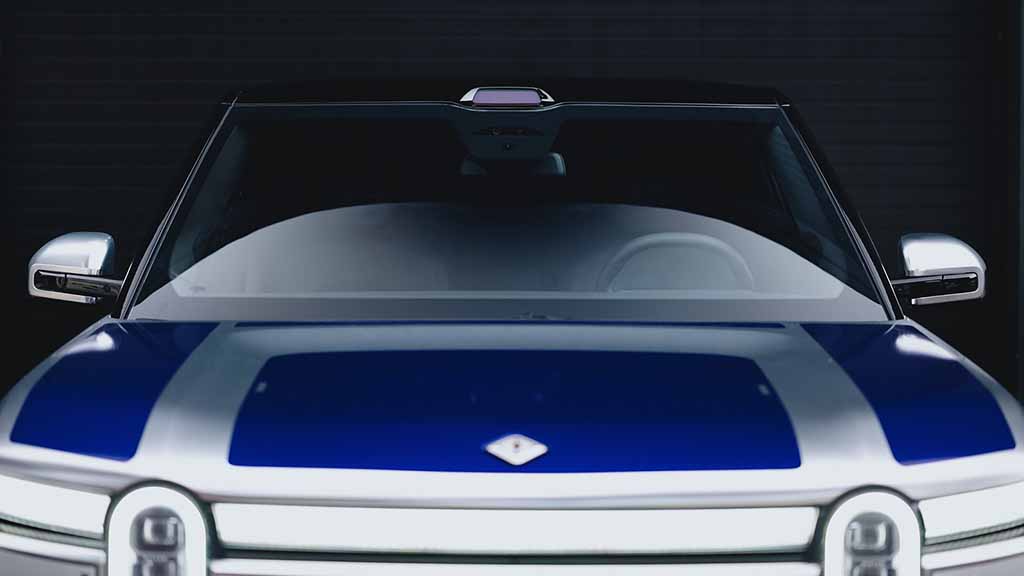
This aligns with the company’s mission to deliver vehicles that handle both urban commutes and off-road escapades reliably. While specifics on the supplier or performance metrics remain undisclosed, the integration underscores Rivian’s commitment to scaling ADAS across its lineup, from the flagship R1 to the more accessible R2.
The R2, priced under $50,000, aims to broaden Rivian’s appeal to families and daily drivers, with production at its Normal, Illinois, plant. As testing progresses, this prototype offers a glimpse into how Rivian balances cutting-edge tech with approachable design.
The company plans to stage this vehicle for mass production in the first half of 2026.