SpaceX
SpaceX launches the first Starlink Falcon 9 mission of 2026

SpaceX has launched its first Starlink satellite mission of 2026 with a Falcon 9 rocket ascending from the Space Launch Complex 40 at Cape Canaveral Space Force Station in Florida.
The payload fairings encapsulated 29 Starlink satellites, expanding global coverage. The booster used in this flight completed its third flight and separated upon sending the second to orbit, and maintained its trajectory to return to Earth to land on the Just Read the Instructions droneship, stationed in the Atlantic Ocean.
Starlink is the world’s largest satellite constellation, which has more than 9,000 satellites in low-Earth orbit, collectively providing high-speed, low-latency internet from space to users in remote areas where terrestrial networks aren’t available.

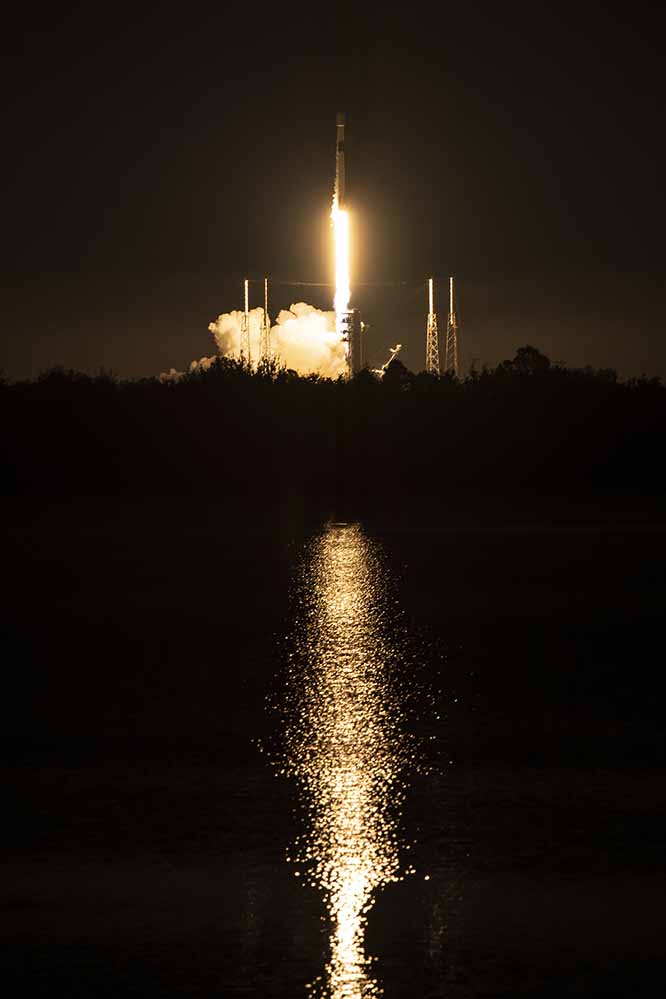
SpaceX has launched the first Starlink mission of 2026 from the Space Launch Complex 40 at Cape Canaveral Space Force Station in Florida (photo – SpaceX)
As of January, the company has launched 300 dedicated Falcon 9 launches for Starlink missions. Among these, 120 launches were conducted only in 2025.
The past year, the SpaceX team deployed its most advanced Starlink V2 mini satellites with enhanced design, adding over 270 Tbps of capacity to the constellation.
This new satellite weighs 575 kg less than the previous generation, allowing Falcon 9 to carry an increased number in payload. These V2 satellites have three advanced laser inter-satellite links for direct communication between satellites.
In 2025, the media peak-hour global speed increased by over 50%, with median download speeds averaging over 200 Mbps and typical upload speeds of more than 30 Mbps with a median global latency ground 25ms. The company has set a goal of delivering a stable 20 ms median latency and minimal packet loss.
As of today, it has grown the user base to 9 million+ customers around 155+ countries. In 2025 alone, it added 4.6 million new customers and added 35+ markets. Since the launch of Airline support, it has served 21 million plus passengers and 20 million+ cruise passengers.
The Starlink team also shared the latest update on their operations. The company has confirmed that it will lower all Starlink satellites orbiting at 550km to 480km by the end of 2026 to increase space safety.