News
xAI Colossus 2 supercomputer yet to use 1GW power: Report

On January 17, 2026, Elon Musk announced that the xAI Colossus 2 supercomputer in Memphis, Tennessee, is now fully operational. He called it the world’s first gigawatt-scale (1 GW) AI training cluster, designed to power advanced models like Grok. Musk added that upgrades would boost it to 1.5 GW by April.
Just two days later, on January 19, Epoch AI, an independent research group, released a report that questions this claim. Using satellite imagery, Epoch analyzed the facility and concluded that Colossus 2 likely cannot yet draw a full 1 GW of power.
According to the report, the main issue is cooling capacity. The cluster is planned to house around 550,000 Nvidia Blackwell GPUs, which consume massive power and produce intense heat. Even in winter, running them at full load requires strong cooling systems to prevent overheating.
Epoch’s satellite photos show that cooling infrastructure, such as towers and related equipment, is still under construction. It estimates that the current cooling supports only partial operation. The report projects the site will not reach full 1 GW power draw until around May 2026, based on the ongoing site work.
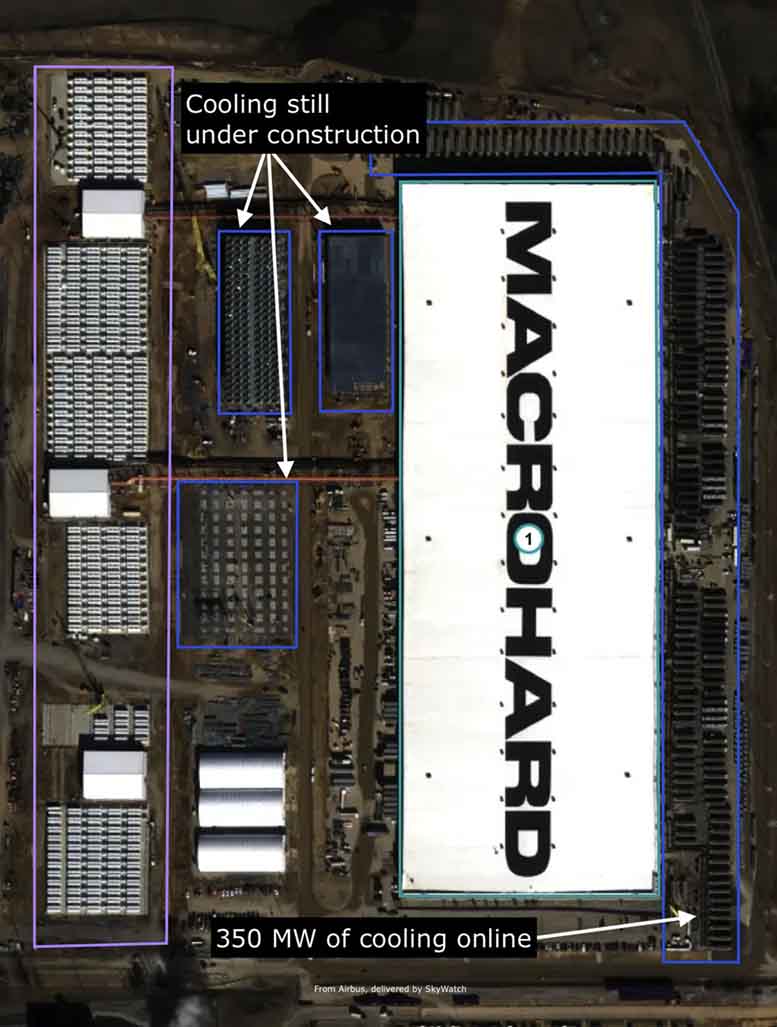

Modern liquid-cooled AI data centers are efficient. Cooling typically adds just 10-15% overhead to total power needs, meaning a 1 GW compute cluster might require 100-150 MW extra for cooling alone. However, delays in building this infrastructure can limit actual performance, even if GPUs are installed.
The Memphis facility has approved power allocations from the local grid operator, Tennessee Valley Authority (TVA), and uses additional sources like gas turbines to meet high demand. Plans point to eventual multi-gigawatt capacity, aligning with xAI’s fast expansion goals.
The report argues that full-scale operation depends on completed cooling, not just installed hardware. This gap highlights a broader challenge in AI development – power and cooling bottlenecks often slow down ambitious timelines, no matter how quickly chips arrive.