SpaceX
SpaceX Falcon 9 spotted using Starship’s hexagonal heat shiled tiles

SpaceX has spotted a notable change during a recent Falcon 9 launch of 25 Starlink satellites from Vandenberg Space Force Base in California. For the first time, the payload fairing carried a small number of hexagonal black tiles identical to those used on Starship’s heat shield.
These tiles appeared in groups on one fairing half, attached over an underlayment sheet. They remained visible during fairing separation in footage from the mission launched on January 25, 2026.
This marks a surprising application of Starship technology on Falcon 9 hardware. The tiles form part of Starship’s thermal protection system (TPS), designed to handle intense reentry heat from orbital or interplanetary returns. Falcon 9 fairings experience milder conditions during ascent and controlled reentry for recovery, but they still face plasma heating.

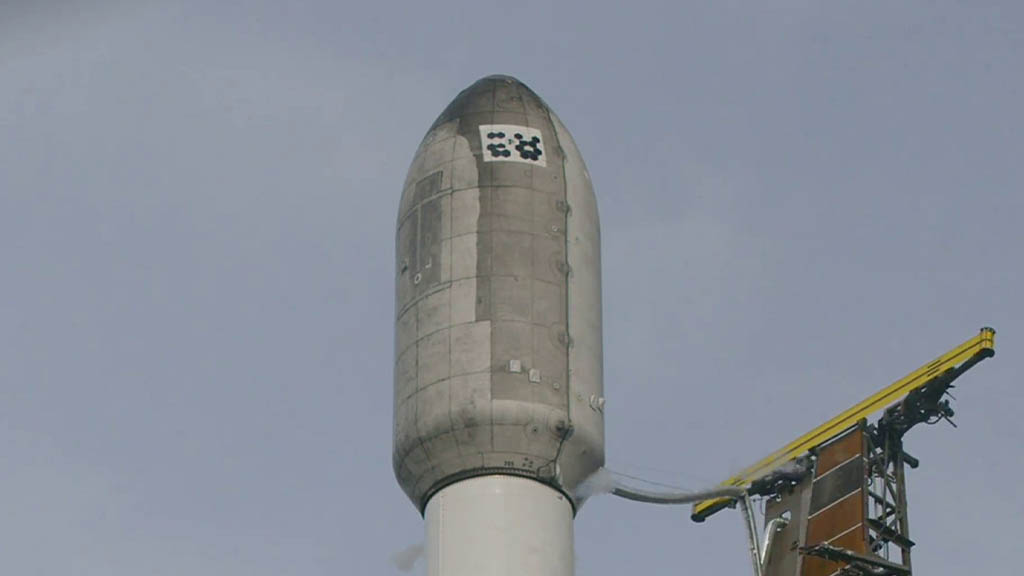
SpaceX Falcon 9 payload fairings using Startship’s heat shield tiles
Observers noted the tiles in pre-launch pad cameras and livestream views. The setup included visible clusters that stayed in place through staging and separation. This approach allows real-world exposure to ascent vibrations, acoustic loads, and some reentry stresses without a full Starship flight. The main reason for this test appears to be cost-effective data collection on tile performance and attachment methods.
Falcon 9 launches happen far more often than Starship flights, providing frequent opportunities for low-risk experimentation. Engineers can evaluate how tiles endure launch conditions, potential gaps between them, and ways to improve attachment designs. This could address challenges like tile loss or shedding seen in early Starship tests, where missing tiles create risks during peak heating.
Starship development relies heavily on iterative flight tests to refine the heat shield. Multiple integrated flight tests have flown prototypes to gather data on tile durability under actual reentry plasma. These flights reveal issues such as tile attachment failures or uneven heating, leading to design updates like better interlocking or materials.
By using Falcon 9 fairings as test platforms, SpaceX could improve learning cycles without waiting for Starship’s slower cadence. This may have higher chances of success here, which may lead to broader tile testing on recoverable hardware.
Falcon 9 launches 25 @Starlink satellites from California pic.twitter.com/kmelCRbkVo
— SpaceX (@SpaceX) January 25, 2026