News
Blue Origin successfully tests Blue docking system

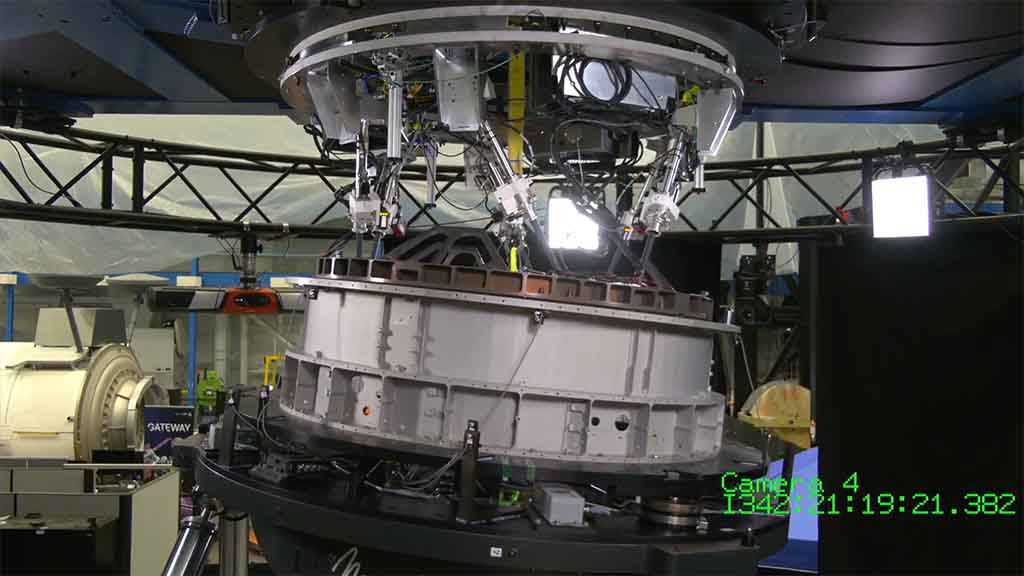
Blue Origin has reached a major milestone in spacecraft interoperability by successfully testing the soft capture mechanism of its Blue Docking System. The tests, conducted at NASA’s Johnson Space Center using the Six-Degree-of-Freedom Dynamic Test facility, verified the system’s performance in flight-like conditions.
This step fulfills a key requirement under NASA’s Commercial Low Earth Orbit Destinations contract and confirms compliance with the International Docking System Standard (IDSS), which enables standardized connections for pressurized spacecraft.
Blue Docking System is developed in-house and designed for reliable docking operations. It will debut on the Blue Moon MK2 lunar lander before integration into the Orbital Reef commercial space station and other future vehicles. This marks Blue Origin‘s first confirmation of a pressurized docking system’s functionality in dynamic scenarios, addressing challenges like misalignment absorption during approach.

The Blue Moon MK2 is a crew-capable lunar lander central to Blue Origin’s efforts to support sustained human presence on the Moon. It is built to meet NASA’s safety standards and supports both crew and cargo missions as part of the Artemis program.
It is powered by the BE-7 engine, a high-performance, deep-throttling propulsion system using liquid oxygen and liquid hydrogen (LOX-LH2) propellants. The engine produces 10,000 pounds of thrust to enable precision landings anywhere on the lunar surface.
In contrast, the Blue Moon MK1 variant is an uncrewed cargo lander capable of delivering up to three metric tons of payload to any lunar location in a single launch aboard the New Glenn rocket. The MK1 includes a pathfinder mission to demonstrate critical systems, such as the BE-7 engine, avionics, and precision landing within 100 meters.
In 2023, NASA awarded Blue Origin a contract to develop a sustaining lunar lander and cislunar transporter under the Artemis program, advancing LOX-LH2 technologies like cryogenic cooling to prevent propellant boil-off.
Recent achievements include multiple pressurized suit test campaigns with NASA astronauts using gravity offload systems to validate crew mobility, cargo handling, and rescue operations on simulated uneven terrain. Additionally, Blue Origin assembled and tested a large deployable sunshield for protection during docked operations with a lunar transporter.
(source)