News
Perplexity upgrades Deep Research Tool

Perplexity, an AI-powered search platform, has launched an upgraded version of its Deep Research feature. The tool is designed to create in-depth reports with sources, charts, and advanced reasoning. The update makes it available now for Max subscribers, with access for Pro users coming in the days ahead.
The enhanced Deep Research combines high-performing AI models with Perplexity’s own search engine and sandbox infrastructure. For Max and Pro users, it now runs on the Opus 4.5 model. The company plans to switch to newer top reasoning models as they are released.
Performance results show clear improvements. On the Google DeepMind Deep Search QA benchmark, Perplexity Deep Research achieved 79.5% accuracy. This places it ahead of Moonshot K2.5 at 77.1%, Anthropic Opus 4.5 at 76.1%, OpenAI GPT-5.2 (xHigh) at 71.3%, Gemini Deep Research Agent at 66.1%, OpenAI o3 Deep Research at 44.2%, and OpenAI o4-mini Deep Research at 40.4%.
Alongside the upgrade, Perplexity released a new open-source evaluation framework called DRACO (Deep Research Accuracy, Completeness, and Objectivity) Benchmark. Unlike many existing tests that focus on single skills like fact recall, DRACO measures real-world research abilities. It requires agents to synthesize information from multiple sources, provide nuanced analysis, and include accurate citations.
The benchmark consists of 100 tasks spread across 10 domains: Finance (20% of tasks), Shopping/Product Comparison (16%), Academic (12%), Technology (10%), General Knowledge (9%), UX Design (9%), Law (6%), Medicine (6%), Needle in a Haystack (6%), and Personalized Assistant (6%). Each task is scored against roughly 40 expert-defined criteria covering factual accuracy, depth of analysis, presentation quality, and citation reliability.

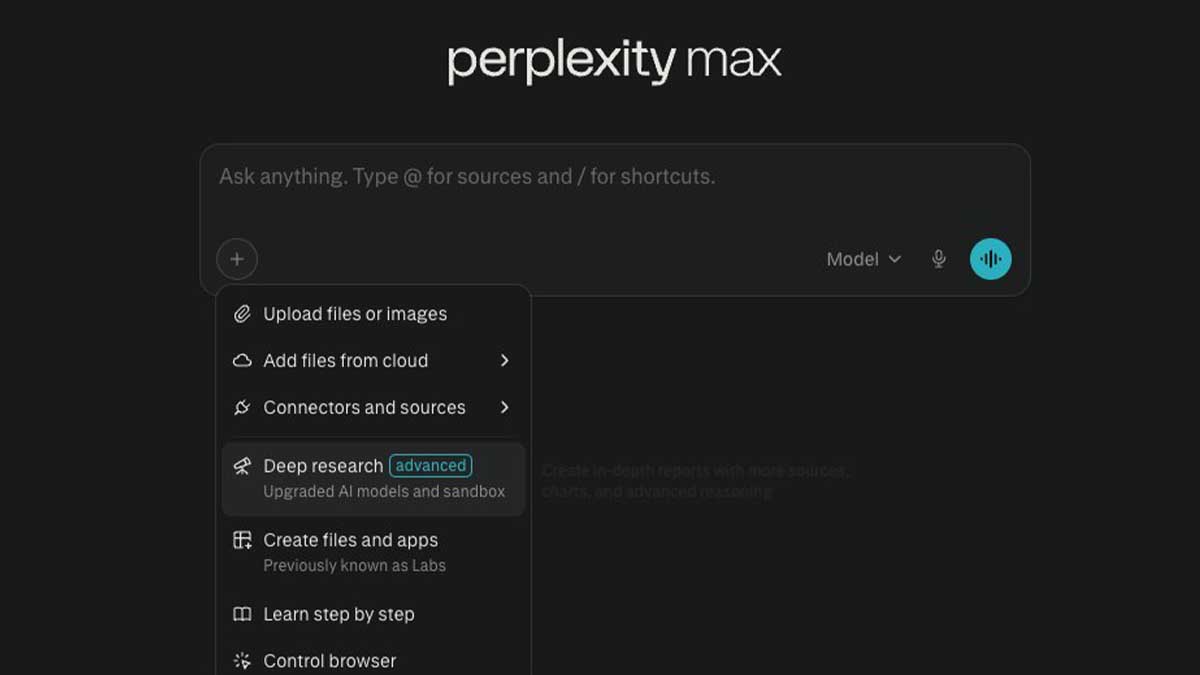
Perplexity Deep Research
In DRACO evaluations, Perplexity outperformed competing tools, including Gemini Deep Research and OpenAI’s o3 and o4-mini Deep Research, across all domains. It performed especially well in Law, Medicine, and Academic tasks. Detailed charts show the AI model leading in every measured category, such as factual accuracy and citation quality.
The full DRACO benchmark, scoring rubrics, methodology paper, and dataset are now publicly available. Researchers and developers can access the dataset on Hugging Face and read the complete paper for further details.
These updates aim to provide users with more reliable and thorough research capabilities while offering the community transparent ways to compare deep research systems.
(source)