ULA
ULA launches USSF-87 mission for U.S. Space Force

United Launch Alliance (ULA) successfully launched the Vulcan Centaur rocket on the USSF-87 mission on February 12, 2026. The rocket lifted off from Space Launch Complex-41 at Cape Canaveral Space Force Station, Florida, at 4:22 a.m. EST.
The VC4S configuration carried a multi-manifest national security payload for the U.S. Space Force Space Systems Command. This payload includes components of the Geosynchronous Space Situational Awareness Program (GSSAP), which enhances detection and characterization of disturbances in geosynchronous orbit over 22,000 miles above Earth. The mission delivers spacecraft directly to geosynchronous orbit during a flight lasting approximately 10 hours.
Vulcan Centaur powers its first stage with two Blue Origin BE-4 engines using liquefied natural gas and liquid oxygen. Four Northrop Grumman GEM 63XL solid rocket boosters provide additional liftoff thrust, each delivering over 459,000 pounds. The Centaur V upper stage uses two Aerojet Rocketdyne RL10C engines.

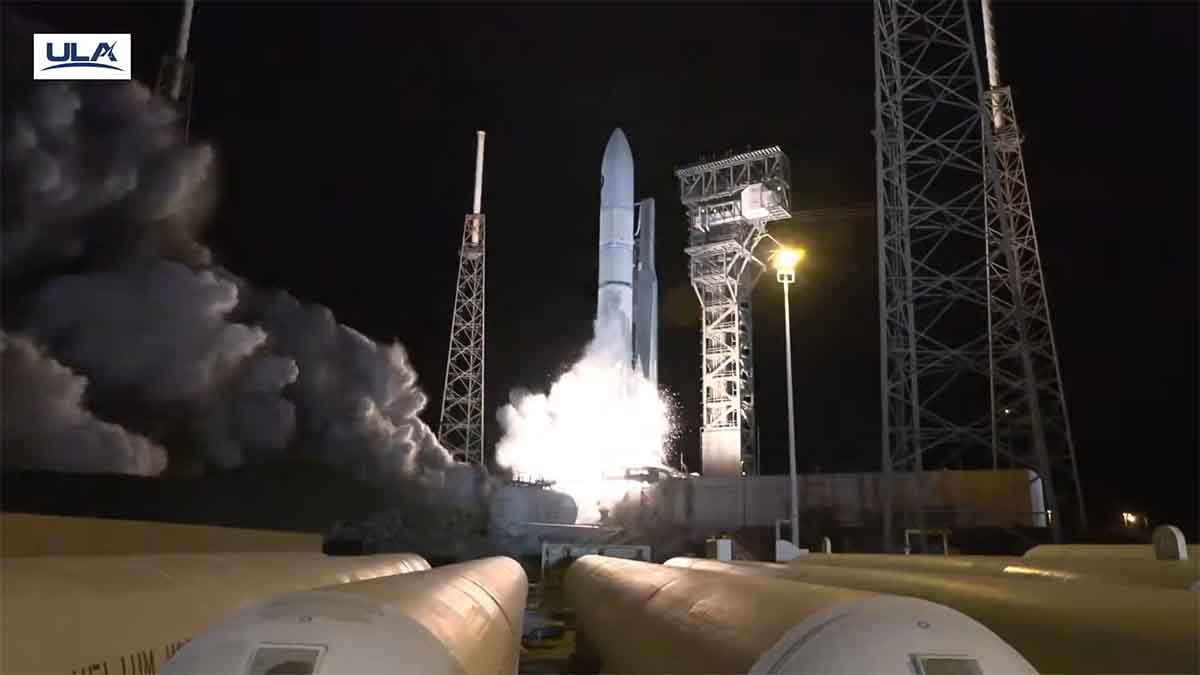
ULA Vulcan Rocket launches USSF-87 mission
This flight marks the second National Security Space Launch mission for Vulcan, following its certification for such payloads. During ascent, observers noted visual signs of an anomaly on at least one solid rocket booster, including apparent nozzle damage and detaching pieces.
Similar booster issues occurred on a prior Vulcan flight in 2024, where a nozzle ruptured early in burn. Despite the observed irregularity, the boosters completed burnout and jettisoned normally, allowing the rocket to continue on main engines.
ULA confirmed solid rocket booster separation during the live webcast but ended coverage shortly after liftoff at the customer’s request due to the classified nature of the mission. No official statement addressed the booster observations immediately.
Vulcan Centaur advances ULA’s transition from retired Atlas V and Delta rockets, offering configurable booster options for varied payloads. The USSF-87 mission demonstrates the rocket’s capability for high-energy direct-to-geosynchronous insertions. As the flight progresses toward payload deployment, the anomaly may prompt further review of the GEM 63XL boosters.