Space
NASA prepares for second wet dress rehearsal ahead of Artemis II

NASA is planning to conduct a second wet dress rehearsal of the Space Launch System (SLS) rocket and Orion spacecraft for the upcoming Artemis II mission. This crewed test flight will send four astronauts on a lunar orbit journey, the first human mission beyond low Earth orbit since Apollo 17 in 1972.
After a partial fueling test on February 12, 2026, the teams identified a filter restricting liquid hydrogen flow and replaced the component. The fix allowed engineers to proceed confidently with the full rehearsal, targeting propellant tanking on Thursday, February 19.
The nearly 50-hour simulated countdown begins February 17 at 6:40 p.m. EST from Kennedy Space Center’s Launch Control Center in Florida. The test culminates in a simulated launch window around 8:30 p.m. on February 19.
During the rehearsal, launch teams will load super-cold cryogenic propellants into the SLS tanks, execute a complete countdown sequence, demonstrate the ability to recycle the clock (simulating a hold or scrub), and safely drain the tanks.
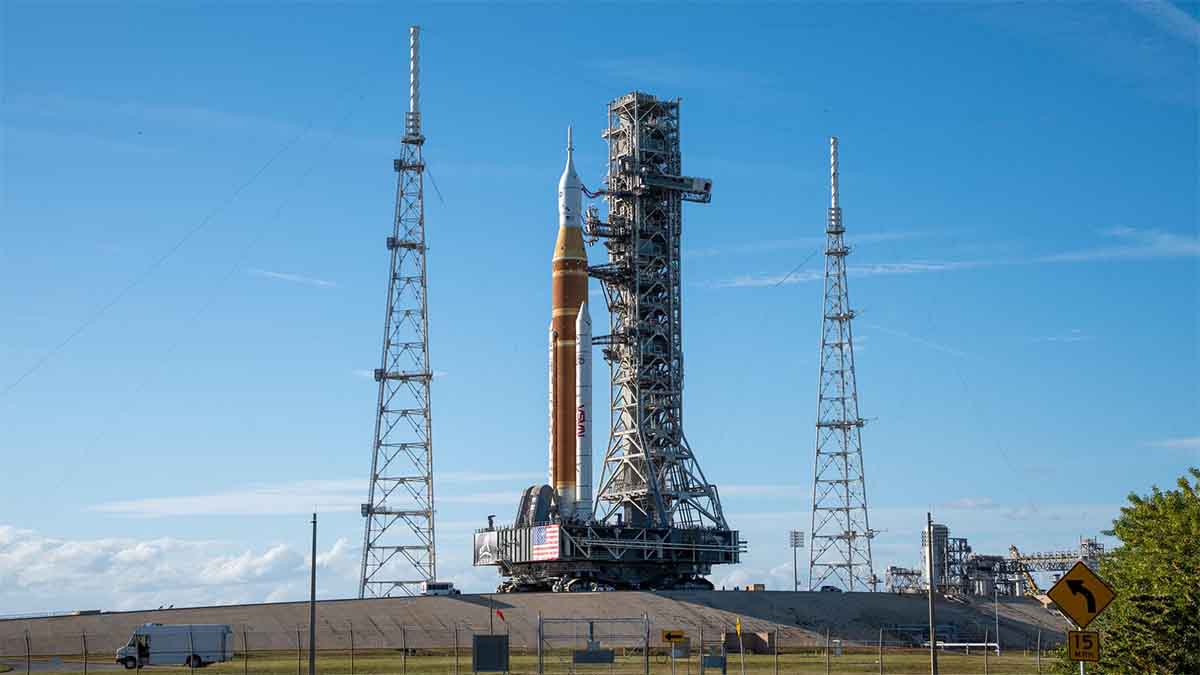

Operators will run the critical terminal count twice, pausing at T-minus 1 minute 30 seconds and T-minus 33 seconds to mimic real-world decision points. A team will also practice Orion spacecraft closeout procedures at the pad, including hatch closure, though the Artemis II crew will not participate.
The Artemis II crew, which includes NASA astronauts Reid Wiseman (commander), Victor Glover (pilot), Christina Koch (mission specialist), and Canadian Space Agency astronaut Jeremy Hansen (mission specialist), awaits this validation of ground systems and procedures.
A successful rehearsal and subsequent data analysis are required before setting a firm launch date. NASA has chosen March 6, 2026, as the earliest possible opportunity that accommodates the rehearsal, reviews, and pad reconfiguration.
Artemis II will demonstrate Orion’s life-support systems and SLS performance while looping around the Moon, paving the way for future lunar landings under Artemis III and beyond.
(source)