Space
This robotic spacecraft can service satellites directly in space

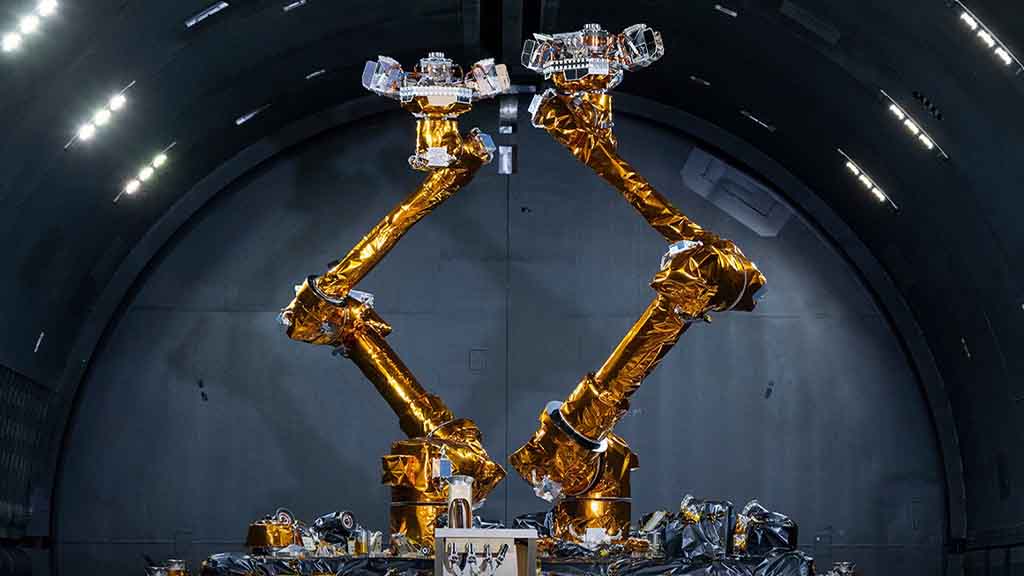
The U.S. has developed a robotic spacecraft that can service operational satellites directly in space with special hardware and capabilities.
The Robotic Servicing of Geosynchronous Satellites (RSGS) has a new robotic system that could fix and improve satellites in orbit. Geosynchronous satellites stay in orbit about 36,000 kilometers (22,000 miles) above Earth. They remain in the same spot on the ground. Many of these satellites are used for communication, weather monitoring, civil services, and national security.
This RSGS system uses a spacecraft with two robotic arms. These arms can inspect satellites, repair parts, upgrade equipment, and add fuel. Meanwhile, the spacecraft has a gold foil covering to protect it from extreme space conditions.
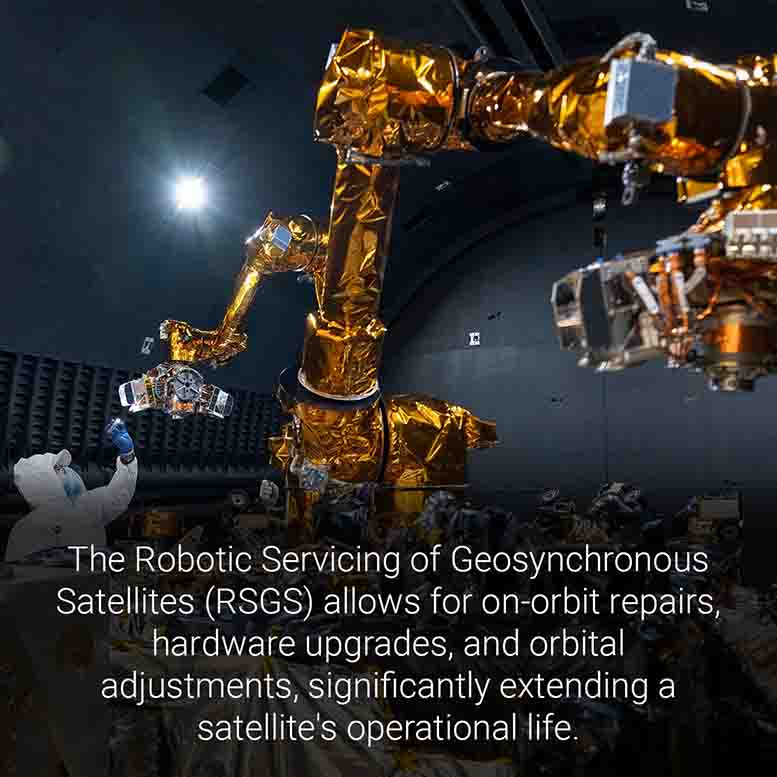
Robotic Servicing of Geosynchronous Satellites (RSGS) spacecraft with robotics arms to service on-orbit satellites (source – @USNavy/X)
The program is led by the Defense Advanced Research Projects Agency (DARPA) and the U.S. Naval Research Laboratory (NRL). They work with Northrop Grumman, which builds the main spacecraft body, called the Mission Robotic Vehicle (MRV).
In September 2025, NRL finished key thermal vacuum tests. These tests placed the robotic payload in a special chamber to check how it works in the hot and cold temperatures of space. The tests succeeded and showed the system can make precise moves and swap hardware in the vacuum of space.
The fully developed RSGS spacecraft is planned to launch in 2026. Following this milestone, it will perform initial checks in orbit. The launch team has planned four U.S. missions through this year to demonstrate refueling and repairs on real satellites.
In contrast, this technology can extend satellite life by several years and reduce the need to build and launch expensive replacement satellites. It also makes key communication networks stronger and safer for national security.
The RSGS is built to service government satellites, including those for national security and civil use. It can also service commercial satellites owned by private companies. The robotic vehicle will be owned and operated by Northrop Grumman.
This setup allows limited resource pooling between government and private partners. Official sources from DARPA and NRL confirm the system supports both government and third-party satellites.
(source)