Tesla
Tesla could launch 230 kW Versions of Model 3 and Model Y


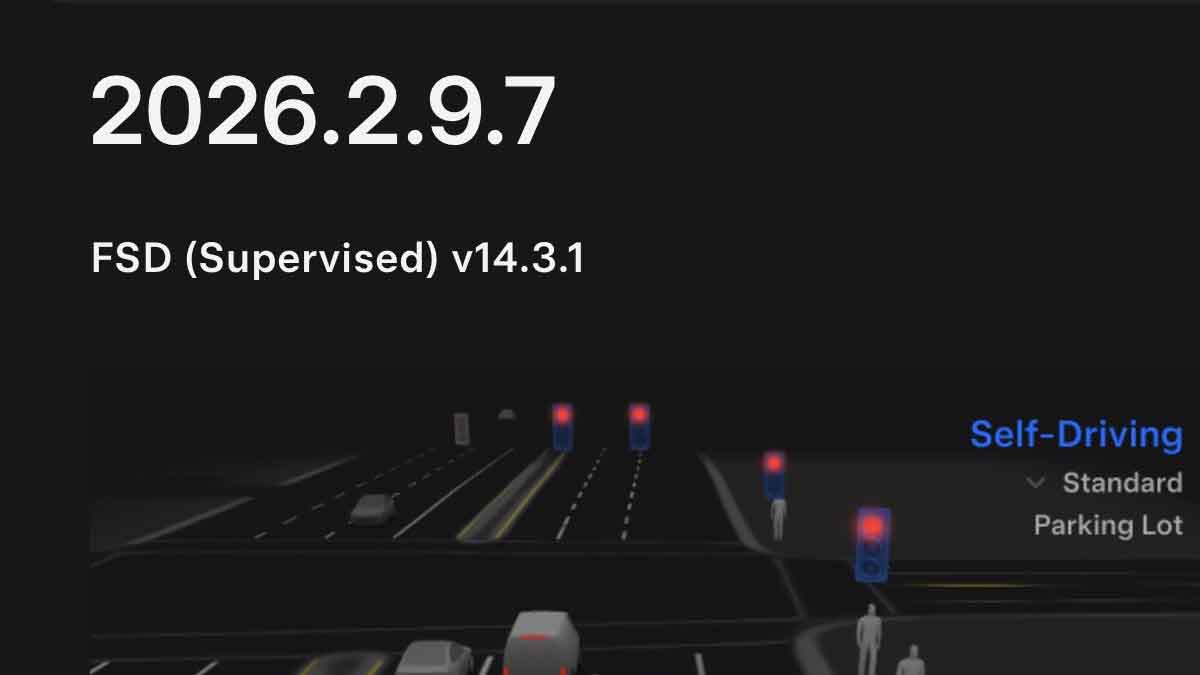
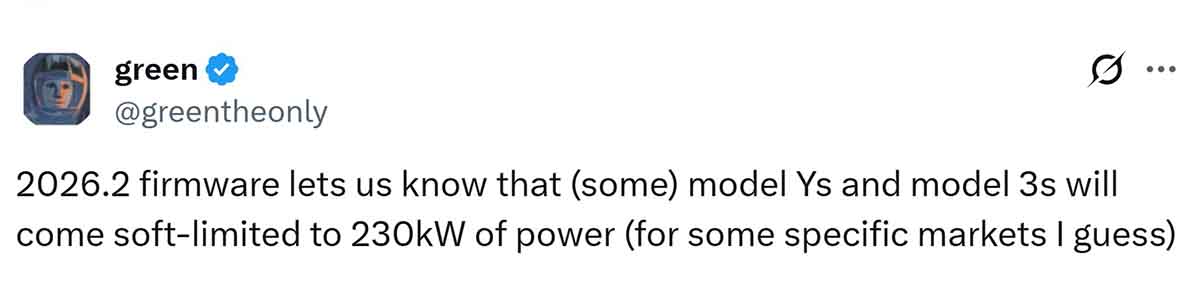
An analysis of Tesla’s 2026.2 firmware by @greentheonly has revealed plans for a software-based power restriction on certain upcoming Model 3 and Model Y vehicles, the code indicates that some units will be soft-limited to 230 kW of drive unit power.
This limit applies specifically to markets with regulations tied to vehicle power output, allowing Tesla to adapt its vehicles to local rules without hardware changes.
The term “soft-limited” means the restriction is implemented through software rather than physical modifications. The vehicles’ motors and batteries could theoretically deliver more power, but the firmware caps output at 230 kW.
This approach may give Tesla flexibility. It can comply with regional requirements at launch while potentially enabling higher performance later via over-the-air (OTA) updates, either for regulatory changes or as a paid upgrade.
This strategy is not entirely new. Tesla has previously offered power-restricted variants in specific regions. For example, in Singapore, a special Rear-Wheel Drive Model Y is limited to 110 kW to qualify for a lower-cost Category A Certificate of Entitlement (COE), reducing ownership expenses without affecting range or top speed.
Community discussions around the firmware finding point to similar needs in markets like Turkey, where vehicle taxes or registration fees may scale with power output. As of early 2026, no current Tesla Model 3 or Model Y variants use this exact 230 kW limit. Existing models have varying power outputs depending on the trim:
- Standard Rear-Wheel Drive versions typically deliver around 194–220 kW from a single rear motor.
- Long Range All-Wheel Drive models combine front and rear motors for roughly 300–350 kW total system power.
- Performance variants reach higher peaks, with the 2026 Model Y Performance rated at approximately 380 kW (equivalent to its 510 horsepower rating).
These figures represent peak system output, which can vary based on battery state, temperature, and other factors. The 230 kW cap appears targeted at future production units, likely standard or mid-tier trims destined for regulated markets.
Since the code appeared in the 2026.2 firmware branch. Released around early 2026, this suggests the restricted variants could enter production and reach customers sometime in 2026, though Tesla has not officially confirmed timing or specific regions.
(source)