SpaceX
FAA allows SpaceX to resume Falcon 9 flights four days after second stage anomaly

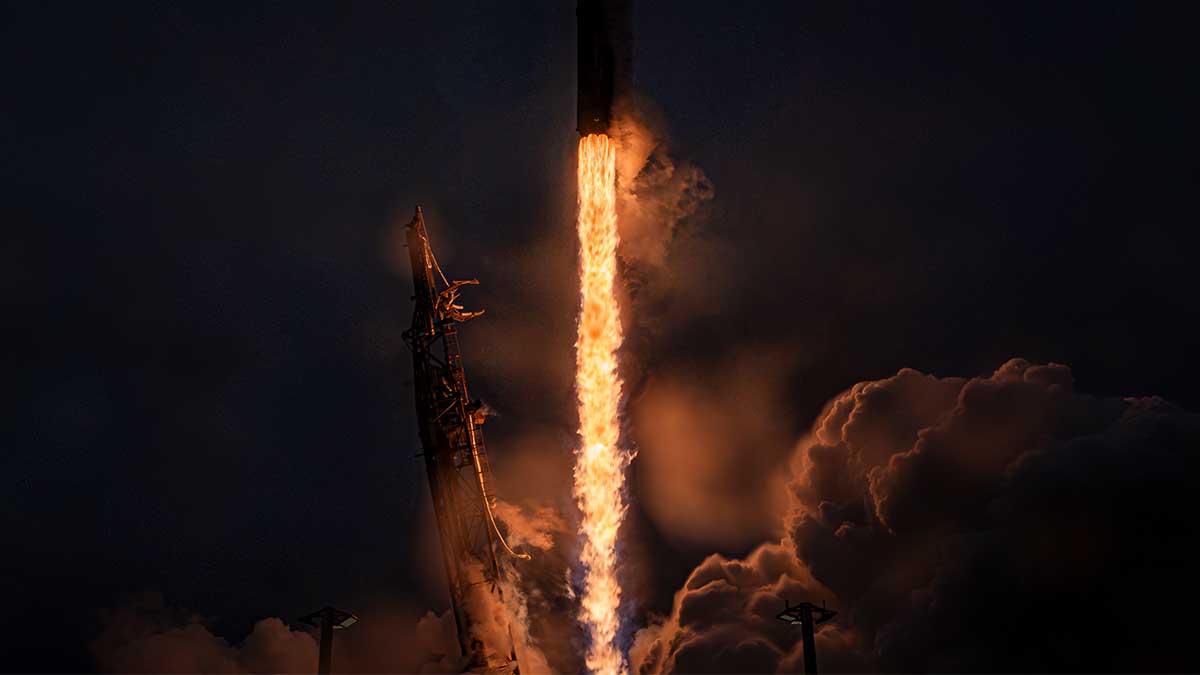
On February 6, 2026, the Federal Aviation Administration (FAA) announced that SpaceX can resume its normal Falcon 9 flight routine following an investigation into an in-space second-stage anomaly during the Starlink Group 17-32 mission.
The mishap occurred on February 2, 2026, when the Falcon 9 second-stage engine failed to ignite for its planned deorbit burn. This prevented the upper stage from performing the maneuver designed to lower its orbit and ensure a controlled re-entry over an unpopulated ocean area.
No public injuries or damage to public property occurred, as the event took place entirely in space.
The FAA required a formal mishap investigation, which SpaceX led under agency oversight.
The investigation concluded within four days, with the FAA accepting SpaceX’s findings and corrective actions. The final report identified the probable root cause as the second-stage Merlin Vacuum engine’s failure to start before the deorbit burn. The rocket maker implemented both technical fixes and organizational improvements to prevent recurrence.
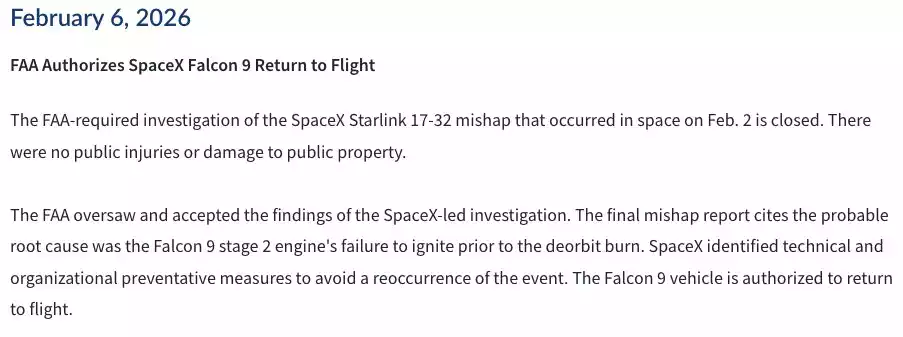
FAA clears SpaceX to return to normal Falcon 9 Flight schedule four days after second stage anomaly
With these measures in place, the FAA closed the investigation and cleared the Falcon 9 vehicle to return to flight. This decision allows SpaceX to resume its high-cadence launch schedule, critical for continuing the deployment of the Starlink constellation.
Falcon 9 remains the world’s most active orbital launch vehicle, with hundreds of successful missions since its debut in 2010. The second stage is used to place payloads into their final orbits and then execute a deorbit burn to comply with orbital debris mitigation guidelines.
Failure to complete this burn can leave the stage in a higher orbit longer than intended, though modern designs and monitoring limit long-term risks.
The swift resolution demonstrates the effectiveness of the FAA’s oversight process for commercial launch providers. SpaceX’s ability to identify root causes and implement corrections rapidly has become a hallmark of its operations, enabling frequent launches while maintaining safety standards.
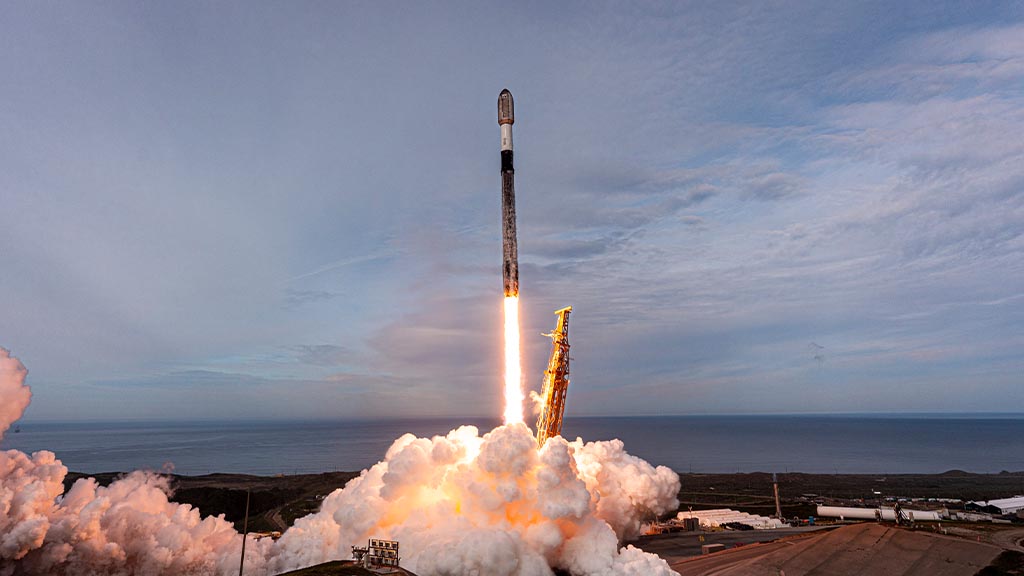
With the FAA’s nod, SpaceX is now having a new Falcon 9 mission of 25 Starlink satellites launching from Space Launch Complex 4 East (SLC-4E) from Vandenberg Space Force Base in California. After that, the Crew-12 will fly to the International Space Station on February 11 (could change based on weather conditions and flight preparations).
(source)