ULA
ULA confirms solid rocket booster anomaly during USSF-87 launch

On February 12, 2026, the United Launch Alliance (ULA) Vulcan Centaur rocket lifted off from Cape Canaveral, carrying critical U.S. Space Force payloads on the USSF-87 mission. Shortly after ignition, observers noted a performance anomaly in one of the solid rocket motors.
Video and images from the ascent revealed visible sparks trailing from the booster, followed by debris bursts as part of the nozzle appeared to fail and separate. This off-nominal event echoed visual signatures seen in prior flights, marking the second instance of such an issue with the solid rocket boosters.
Despite the booster irregularity, the rocket’s core stage and the Centaur upper stage operated flawlessly. These components compensated fully, delivering the spacecraft directly into its intended geosynchronous orbit with precision. Official updates confirmed the mission’s complete success, highlighting the system’s built-in margins that allowed it to absorb the anomaly without compromising payload deployment.

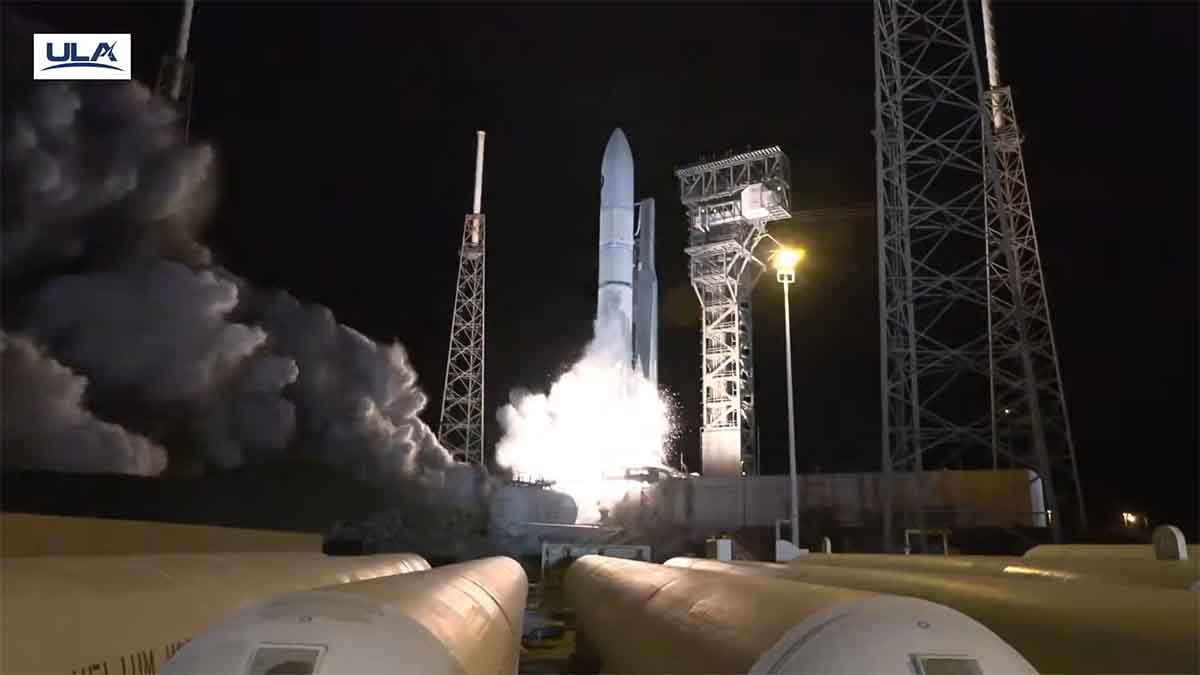
ULA Vulcan Rocket launches USSF-87 mission
The USSF-87 payloads included advanced national security spacecraft designed for space situational awareness in geosynchronous orbit. Among them were satellites tasked with monitoring activities in this strategic region, serving as a vigilant patrol to detect potential threats to U.S. assets. An additional propulsive ring system was aboard to support on-orbit testing of maneuvers and resilience tactics.
Meanwhile, the recurring solid rocket motor challenges underscore ongoing scrutiny of booster performance. However, the company is investigating the issue and will fix it with future launches.
(source)