News
FCC grants approval for Tesla wireless charging system

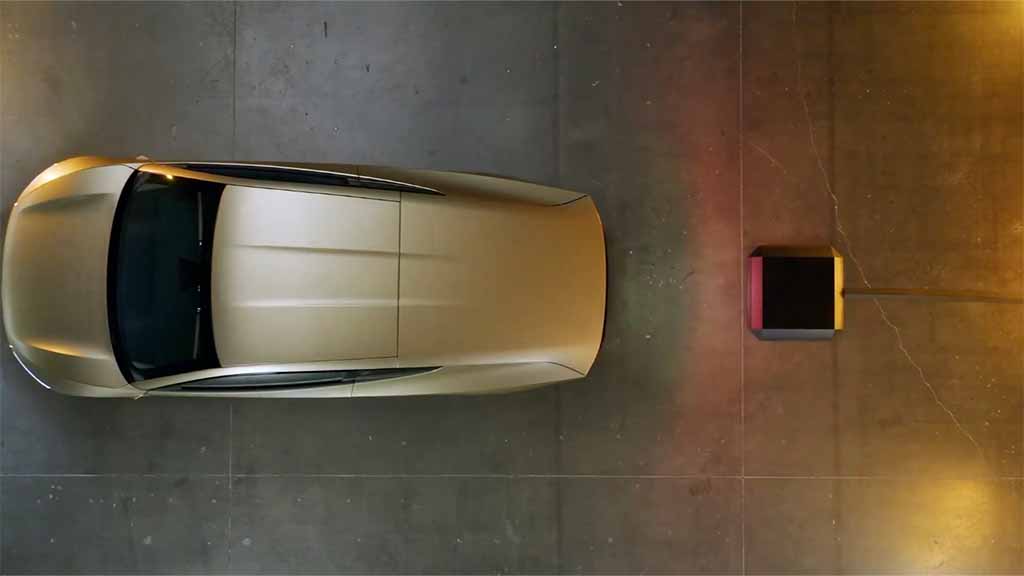
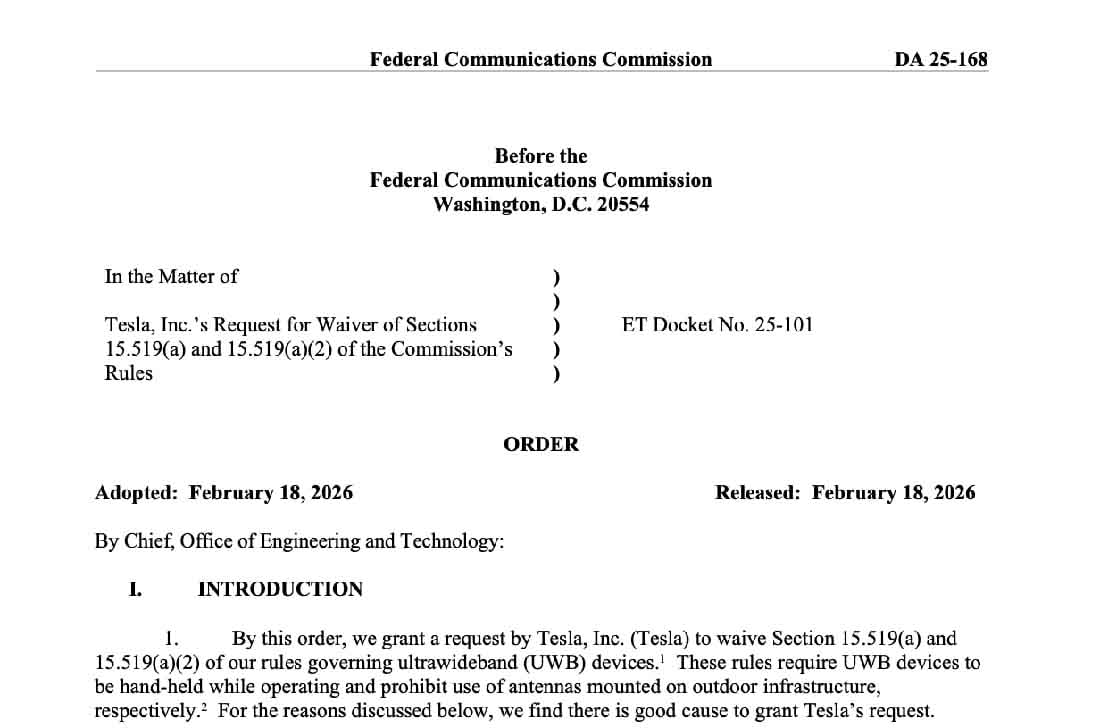
Tesla has scored a regulatory win today as the FCC approved its outdoor wireless charging system on the Cybercab. Regulators waived the usual limits on ultra-wideband radio so Tesla can install fixed ground pads anywhere, even outside. This step clears a big technical barrier for the robotaxi to charge without human assistance.
In reality, the car spots the pad first through Bluetooth, then fires short, low-power ultra-wideband signals only while it lines up. Those signals last just seconds between the vehicle and the pad. Once the coils align, power transmission begins through magnetic fields into the battery.
The system is discreet because Tesla has decided to keep the power levels tiny and turns everything off the instant parking finishes, while limiting signals to ground level. The regulator found no risk of interference with other devices, a key reason for a fast approval.
This matches exactly what Tesla showed at the Cybercab unveiling last year. The vehicle rolled smoothly over the pad, aligned with the pad’s location, and started charging.
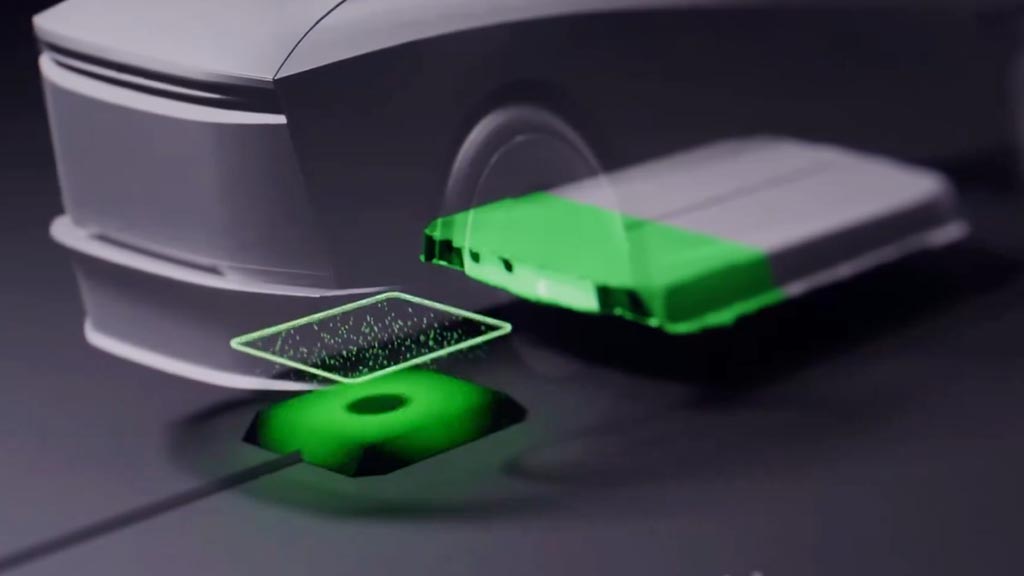
Tesla Wireless Charging (Source – Tesla)
This new milestone follows another major development. Yesterday, the very first steering-wheel-free Cybercab rolled off the line at Giga Texas. Volume production is expected to kick off in April, with early units heading straight into robotaxi fleets before 2027.
Tesla plans to sell the consumer version to individuals for under $30,000 before next year. Meanwhile, users are waiting for a 24-hour robotaxi run in this advanced vehicle. These vehicles will simply drive over dedicated pads at depots or curbside spots between rides, top up efficiently, and head out again.
Wireless charging solves the biggest hurdle for nonstop robotaxis. Traditional plugs wear out, slow down operations, and need humans to handle them. This will improve the uptime and drop maintenance costs across thousands of vehicles. The combination of full self-driving (FSD), no charge port, and automatic wireless power will create a seamless robotaxi experience.
Author’s take
Today’s FCC decision is a big relief for Cybercab’s launch and makes its charging infrastructure easier than that of other autonomous vehicles. It will ease the cost of operations, but wireless charging provides a slower charging rate compared to plug and charge system. However, Tesla CEO Elon Musk has said that the wireless charger will deliver over 90% efficiency.