SpaceX
Second-generation SpaceX Direct-to-Cell Starlink satellites to launch in 2027


In a recent filing with the Federal Communications Commission (FCC), SpaceX highlighted the rapid success of its direct-to-cell Starlink satellite system while revealing plans for a significantly improved second-generation version launching in 2027.
With direct-to-cell Starlink service, SpaceX is pushing boundry of satellite connectivity beyond the terminal. The system beams the internet directly to unmodified mobile phones via satellite.
The first-generation direct-to-cell service, known as Supplemental Coverage from Space (SCS), launched in July 2025 in partnership with T-Mobile. It has since expanded dramatically to 22 countries, providing coverage to over 400 million people.
Source – @SawyerMerritt/X
Last year, the company completed the first generation Starlink Direct to Cell constellation with more than 650 satellites in low-Earth orbit, which took a total of 18 months to launch all satellites.
More than 6 million customers access the service monthly for texting, data, and voice calls—all on standard smartphones without any hardware modifications. This breakthrough has already proven invaluable, delivering connectivity in remote areas, during emergencies, and where traditional cell towers fall short.
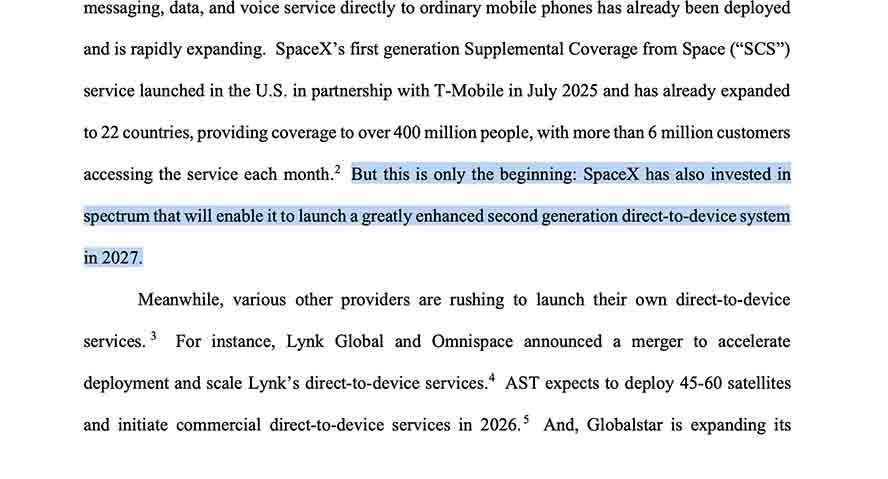
However, SpaceX emphasizes that this is just the start. The rocket maker has also invested in spectrum that will enable it to launch a greatly enhanced second-generation direct-to-device system in 2027.
The second-generation system promises substantial upgrades over the current one. While specific technical details like satellite antenna sizes, power levels, or exact bandwidth allocations are not detailed in the filing, the enhancements stem from strategic spectrum investments.
These allow for improved performance, potentially including higher data speeds, greater capacity, and more reliable connections compared to the first-generation’s foundational capabilities focused on basic messaging, data, and voice.
In contrast to the existing service, which relies on partnerships for spectrum and delivers essential but limited supplemental coverage, the 2027 system aims for broader, more robust, ubiquitous wireless access. This upgrade could reduce dependency on terrestrial networks, offering more seamless global roaming.
By 2027, this enhanced direct-to-cell technology may bring high-quality mobile service to billions in underserved regions, boosting economic opportunities, emergency response, and daily communication.