Tesla
Tesla Robotaxi Expansion Plan Announced: Cities and Rollout status

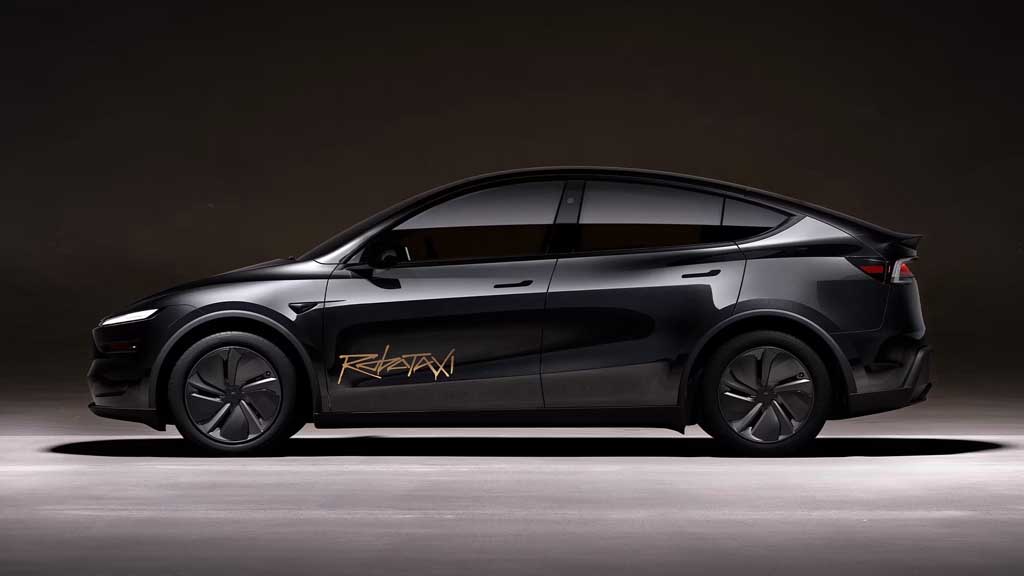
Tesla has shared a progress and expansion plan for its Robotaxi service, an autonomous ride-hailing system designed to provide driverless transportation. On January 29, 2026, the official Robotaxi X account posted a table outlining current operations and future rollout plans. The announcement highlights steady progress toward fully unsupervised rides in more cities.
Currently, the service operates in two main areas. In the San Francisco Bay Area of California, Robotaxi vehicles still require a safety driver. This human overseer sits in the car to monitor and take control if needed. It allows Tesla to gather real-world data while ensuring safety during testing. In Austin, Texas, the service is moving forward without a safety monitor.
Looking ahead, Tesla plans to launch in several new cities during the first half of 2026 (January to June). These include Dallas and Houston in Texas, Phoenix in Arizona, Miami, Orlando, and Tampa in Florida, and Las Vegas in Nevada. The table labels these as planned coverage, showing Tesla’s goal to expand quickly across high-demand regions.
Robotaxi works like a regular ride-hailing app, but with no human driver. Users request a ride through the Tesla app. A nearby Tesla vehicle with cameras, sensors, and advanced software—arrives automatically.
The car uses Tesla’s Full Self-Driving (FSD) system to navigate roads, follow traffic rules, and reach the destination. In unsupervised mode, the vehicle handles everything on its own, relying on artificial intelligence trained from millions of miles of driving data. Passengers simply sit back, and the car doors unlock upon arrival.
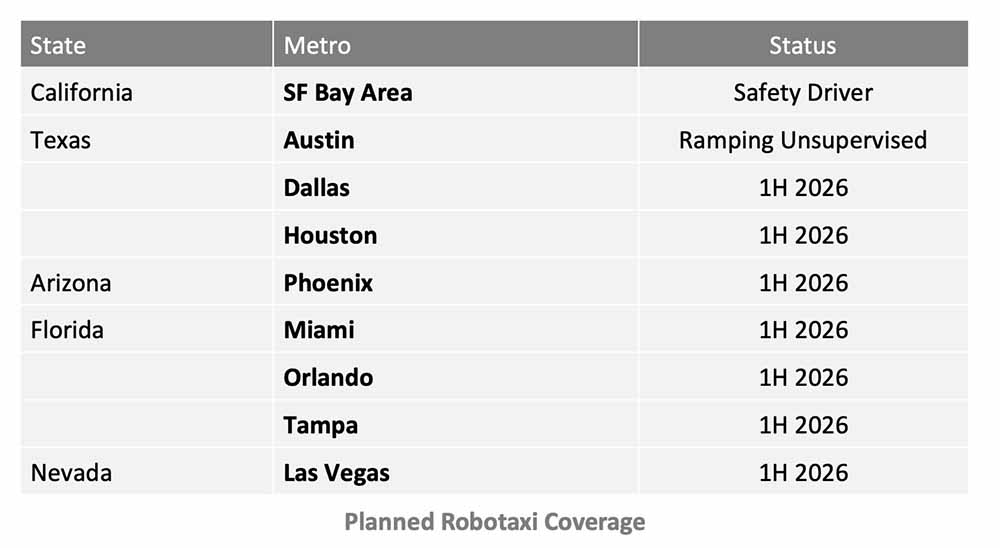
Tesla Robotaxi Progress and Expansion Plan for Cities (Source – Tesla)
These expansions depend on regulatory approvals. Each state has its own rules for autonomous vehicles. Some require permits, safety reports, or demonstrations before allowing driverless operations on public roads.
California, for example, has strict requirements, which explains the ongoing use of safety drivers there. Texas and other states are often more flexible, enabling faster progress in places like Austin. Tesla must work with local authorities to prove the technology is safe and reliable. Delays could occur if approvals take longer than expected.
Overall, the announcement shows Tesla’s step-by-step approach: start with supervision, collect data, gain approvals, then go fully autonomous. The planned growth to eight new metro areas in 2026 could make Robotaxi available to millions more people, offering a convenient and potentially lower-cost alternative to traditional taxis or rideshares.