SpaceX
Next-gen SpaceX Super Heavy booster will double the grid fins size

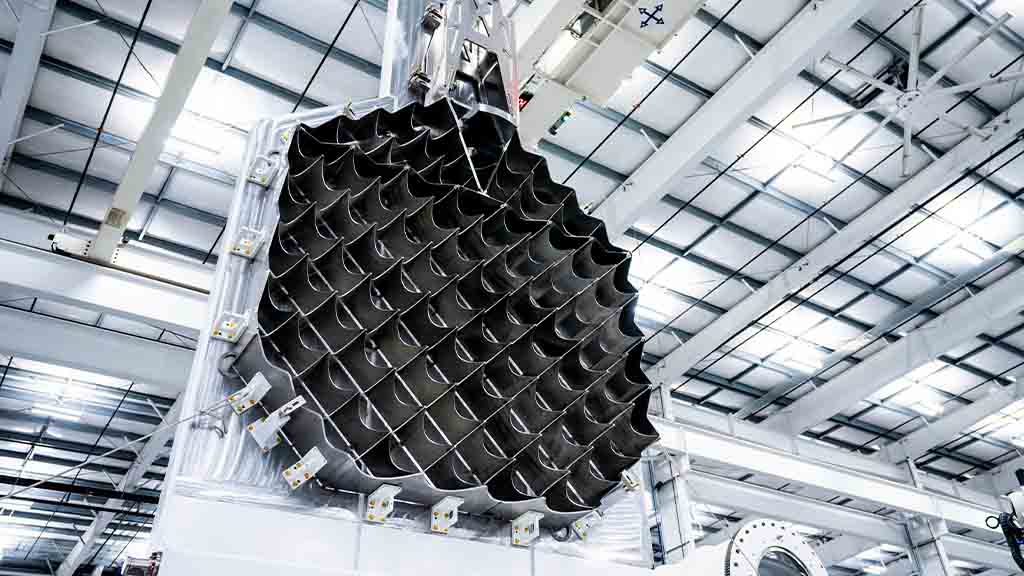
SpaceX has revealed the grid fins design for the next-gen Starship Super Heavy booster with double the size compared to the current generation.
The rocket maker is working on new upgrades of its next-generation Super Heavy rocket for powerful Starship launches. These new grid fins are 50 percent larger than their existing counterparts. Thus, providing more stability to the launch vehicle when it returns for the landing sequence on the catch tower’s chopsticks.
The grid fins continue the honeycomb structure, but it’s more like a super giant waffle. The design suggests that the fins are made of welded stainless steel.
Another major change in the design is that the booster will only feature three of these fins rather than four in the current version. This move will enable the descent at higher angles of attack. This is also a key process of the Starship booster, which helps to save fuel and provide more maneuverability on the descent.
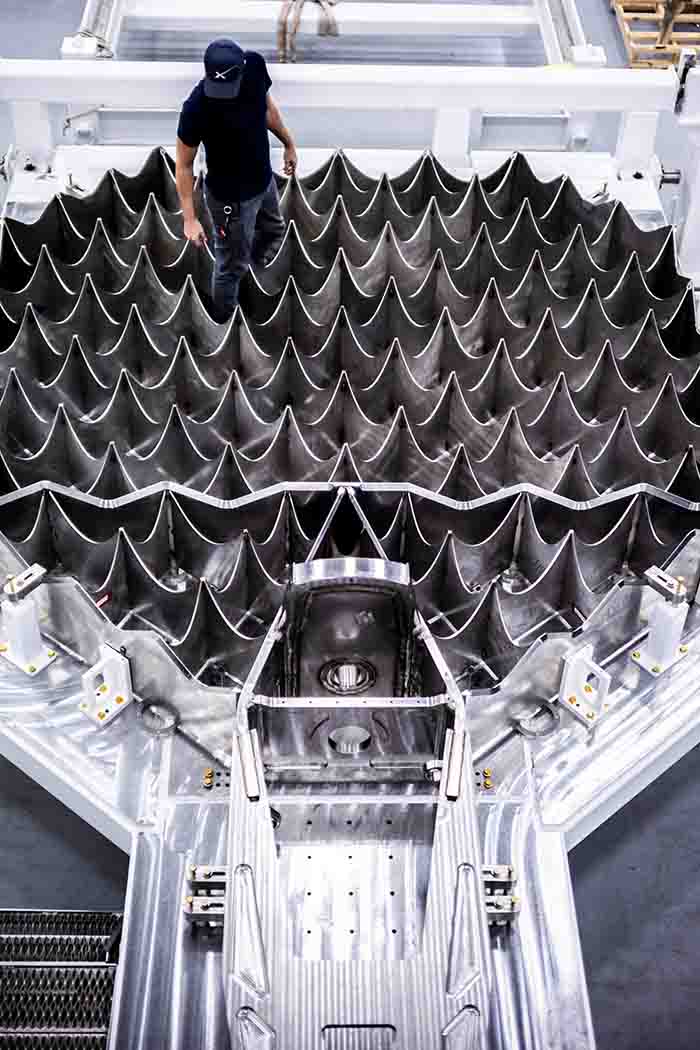
Next-gen SpaceX Starship Super Heavy booster grid fins
During Flight 9, the Super Heavy demonstrated a higher angle of attack on its way back to Earth. By increasing the amount of atmospheric drag on the vehicle, a higher angle of attack results in a slower descent speed, which in turn requires less propellant for the initial landing burn. Data collected with these tests allows the company to improve the next-gen super heavy design, as SpaceX mentioned in the latest post.
SpaceX said in a statement that the new grid fins will also be used for vehicle lift and catch with the new catch point addition. The engineers have now readjusted the fins’ position slightly lower to align with the catch tower arms.
This move will reduce the heat impact from the Starship engines during hot-staging and place the fin shaft, actuators, and fixed structure inside the booster’s main fuel tank.
According to the Starship development roadmap, the next-gen Super Heavy will offer 3650 tons of propellant capacity and 8240 tf thrust generation. SpaceX could employe this new booster as soon as the end of 2025 or early next year.