SpaceX
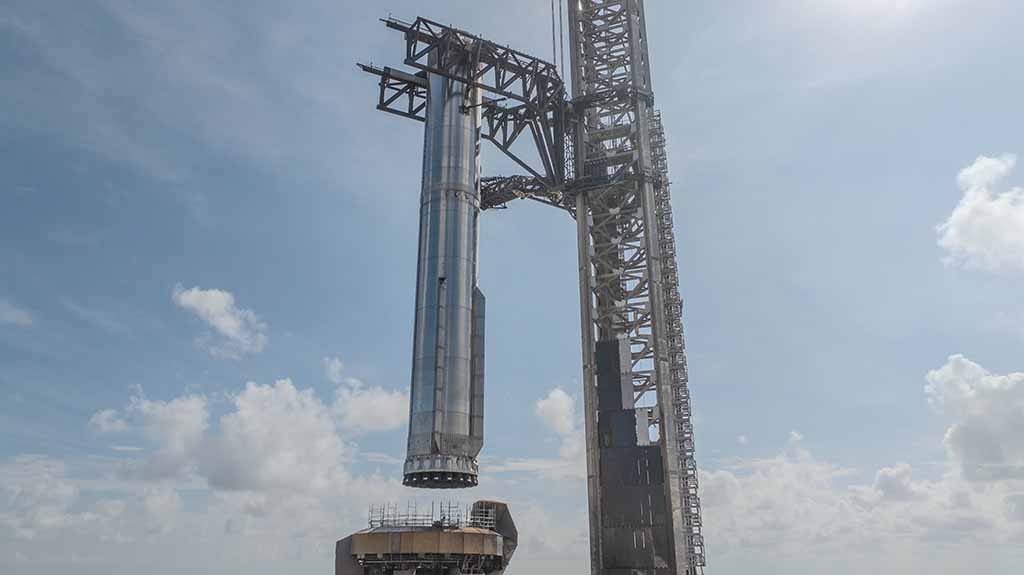
SpaceX stacks Starship Flight 11 booster on the launch pad

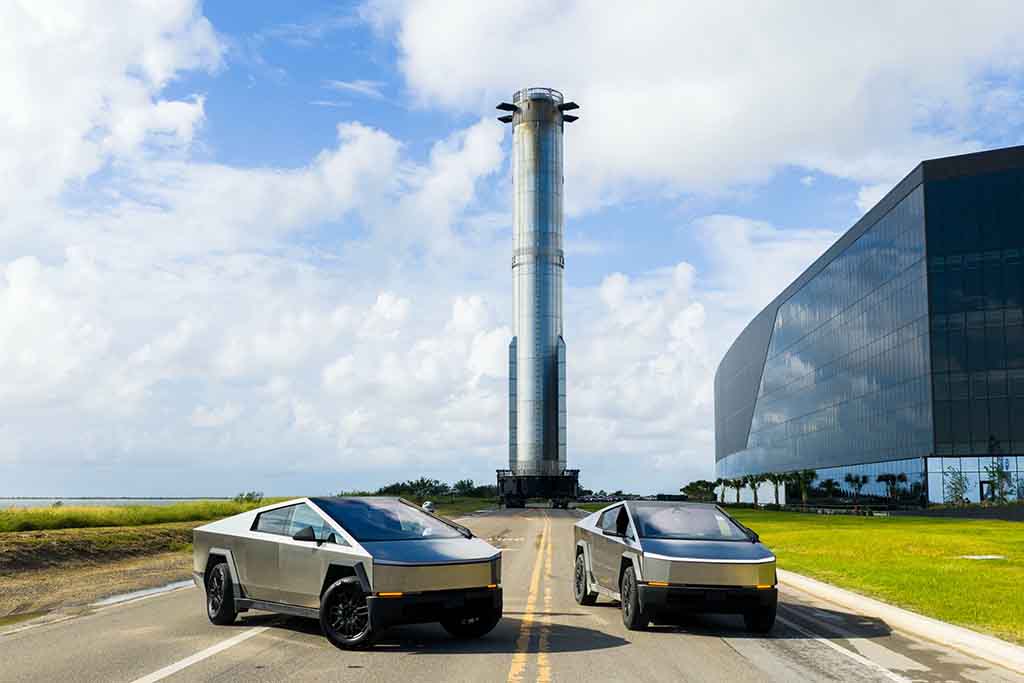
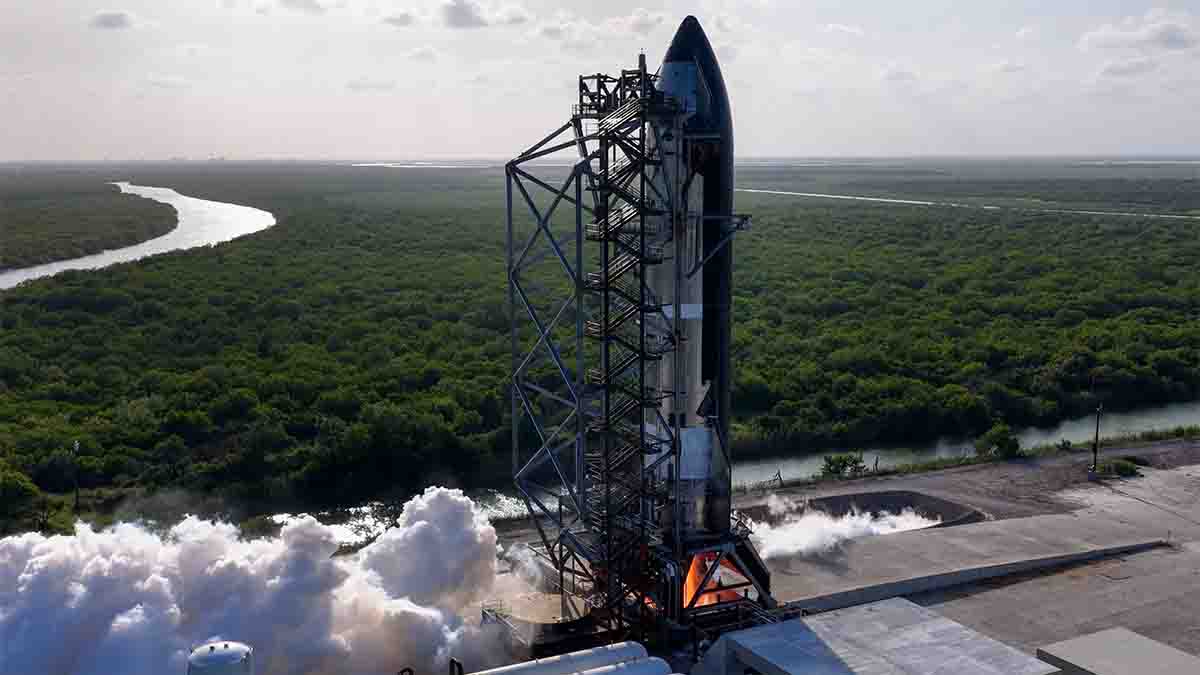
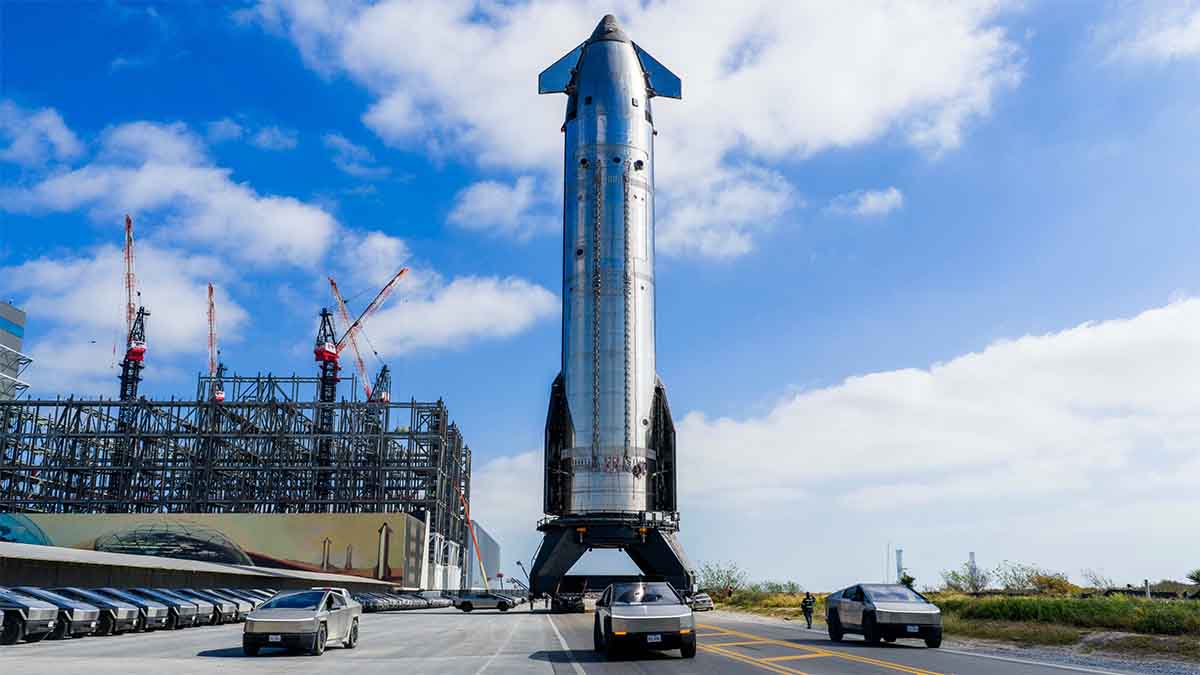
SpaceX has moved the Starship Flight 11 super heavy booster to the launch pad at Starbase, Texas, preparing for the liftoff targeting Monday, October 13. The visuals posted on the social media site X show this massive rocket being escorted by Tesla Cybertrucks from the Megabay.
Starship is designed as a fully reusable rocket, combining a super heavy booster and a second stage that carries a payload. The booster is 232 feet tall and 29.5 feet wide, and uses subcooled liquid methane and liquid oxygen. It is equipped with 33 Raptor engines; combined, these generate a total of 7,590 tf of thrust.
The booster returns to the launch site and makes a landing between the launch tower’s mechanical arms. Then it can be refurbished to enter the flight sequence once again. SpaceX has already performed this maneuver twice in the past flight tests, but new experiments are now taking place to get data for the next-gen booster.
During flight 11, the booster will not return to the launch site; instead, it will test a unique landing burn engine configuration for the upcoming booster design. It will use this trajectory to an offshore landing point in the Gulf of America.
The Super Heavy booster will kick-start its 13 engines at the beginning of the landing burn and transition to a new configuration with five engines to divert phase. This maneuver was previously completed with three engines, which is now paving the way for using five engines.
This number increase will be responsible for fine-tuning the booster’s pasth, adding additional redundancy for spontaneous engine shutdowns. The booster will transition to its three center engines for the ned of the landing burn, and enter a full hover while still above the ocean surface. It will be followed by a shutdown and dropping into the Gulf.
The primary goal of the flight test is to measure the real-world vehicle dynamics as engines shut down while transitioning between the different phases.
The next part in the flight preparation is to also bring the ship to the launch site and stack it on top of the first stage, which will happen within the next two days.