SpaceX
SpaceX confirms reusing a Super Heavy booster with flight proven hardware

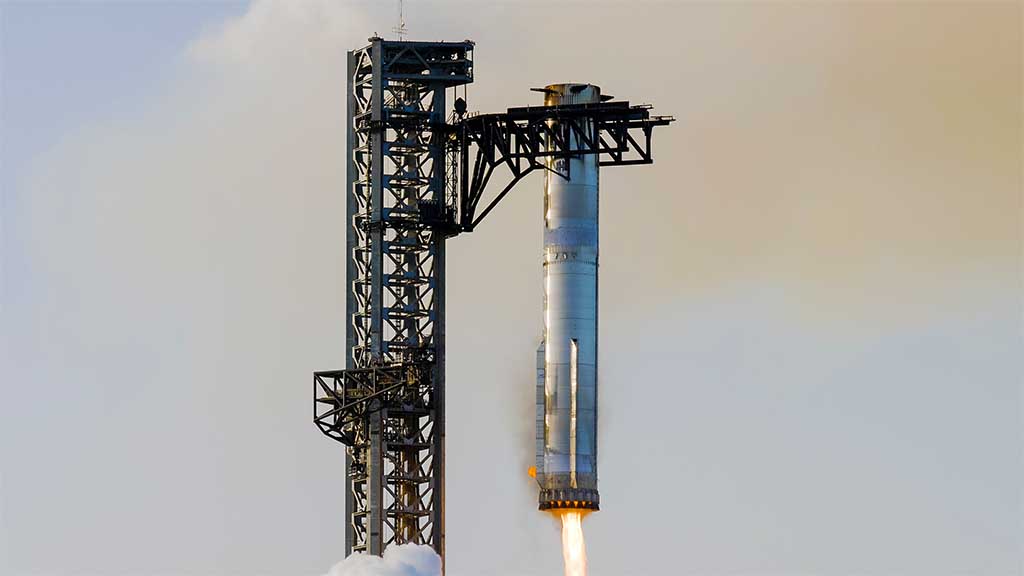
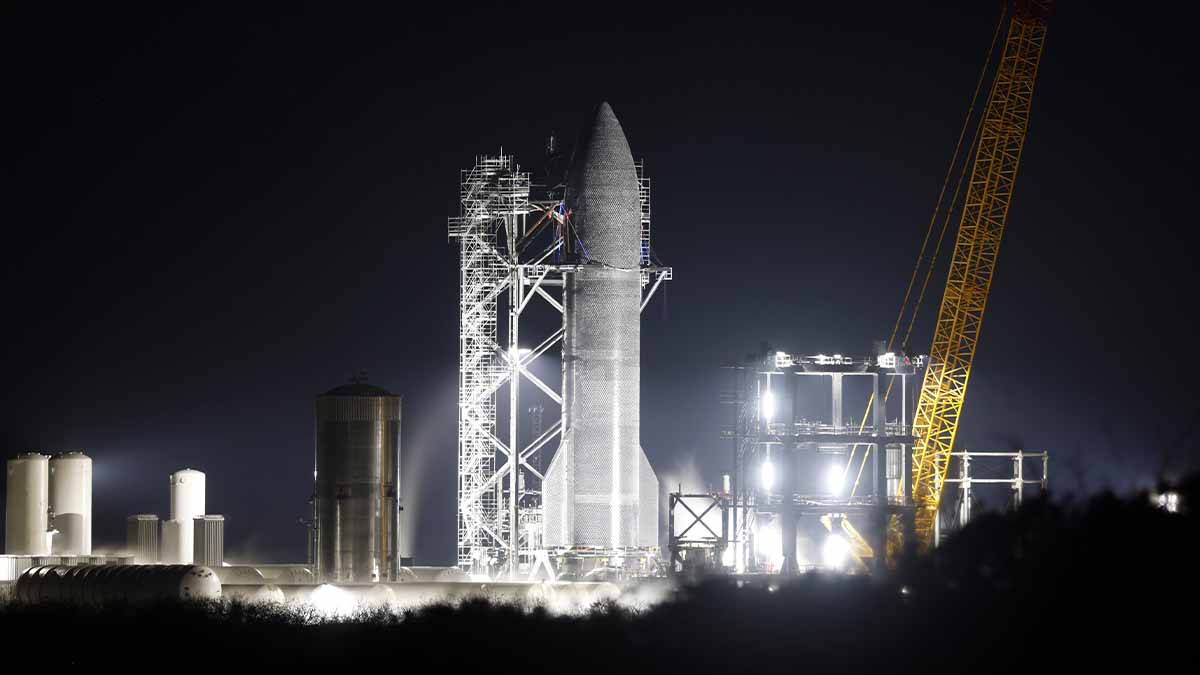
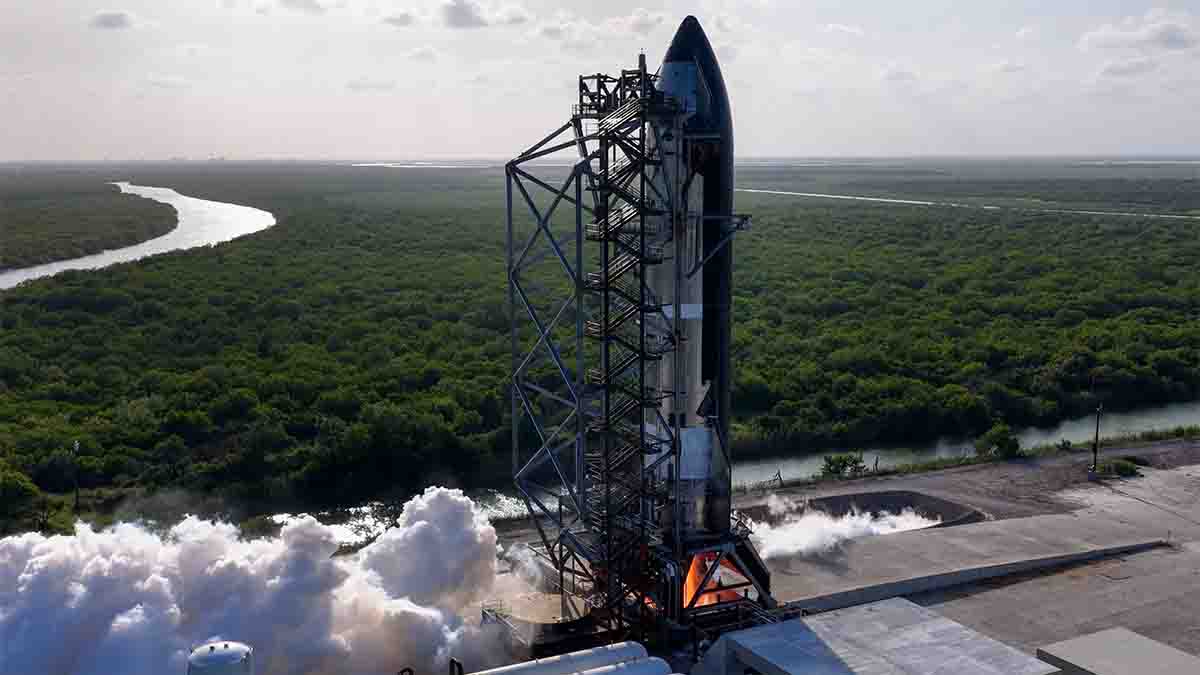
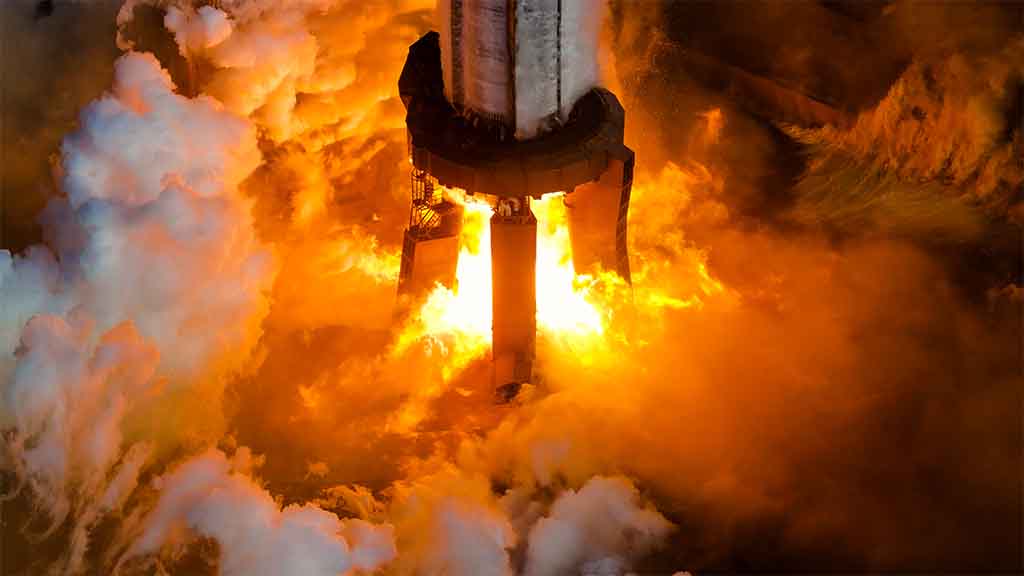
Today, SpaceX static-fired its Super Heavy booster for Flight 9 and confirmed that it is reusing this stage for the first time in the Starship’s reusability program.
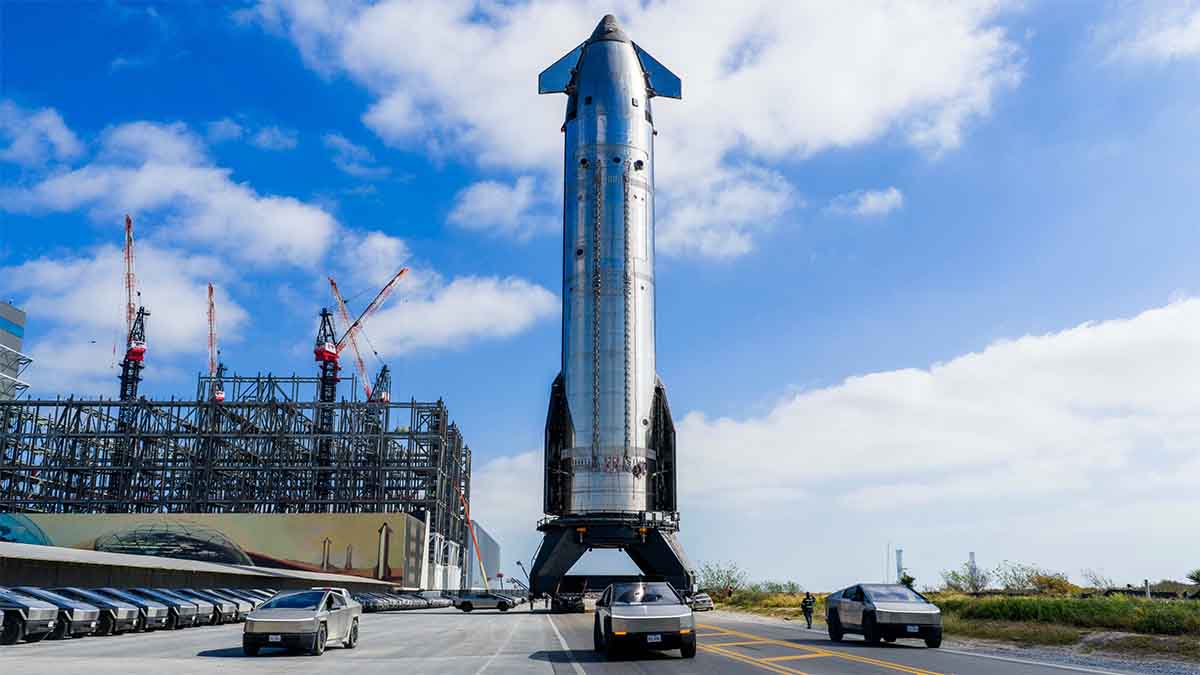
The integrated Starship is designed to reuse the first and second stage for rapid reusability. The first stage is responsible for taking the second stage off the ground and launching it into the space.
This task is completed by the booster’s 33 Raptor engines, which generate more than 16 million pounds of thrust during liftoff. The booster took the first step toward reusability with Flight 5, when it landed vertically on the launch site in-between the tower’s chopsticks.
In the following mission, the company tried to repeat the catch but failed due to some issues in the launch tower, before they could even initiate the catch sequence.
Source – SpaceX
Flight 7 attempted to catch and made it a success, but that’s not the end of the story. SpaceX reused one Raptor engine from Flight 5 booster as the first-ever flight proven hardware in Flight 7’s booster. So, the company has been preparing for this new move for the past six months right after flight 5.
Since it verified one hardware reusability, we’re now moving to the next major milestone. With Starship Flight 9, SpaceX will be reusing the Super Heavy booster including 29 flight proven raptor engines, which means only 4 of them will be new.
This is a major milestone for SpaceX, as it getting close to achieving maximum reusability for both of the integrated flight stages.
The static fire, which lasts a few seconds, tests the engine ignition, propellant system and ground support without leaving the launch pad. With this test completed, SpaceX could now move with the second stage and find a way to make it through the orbit, which is still in problem for the past two flights.
(source)